

Why study science communication?
Do you love science and telling stories? Can you imagine a job that lets you talk to the smartest people on the planet and allows you to turn what you've learned into beautiful storytelling projects?
If the answer is yes, a career in science communication might be the perfect choice for you.
Career prospects are actually quite good. Because we need science to address many of today's most pressing issues like pandemics, climate change or artificial intelligence, science communicators are in demand—be it in journalism, governments, NGOs, think tanks, museums or ad agencies.
What makes the Ansbach Master Program stand out?
-
Taught entirely in English.
-
You'll learn both strategic and journalistic communication of findings not only from natural sciences, but also from social sciences and humanities.
-
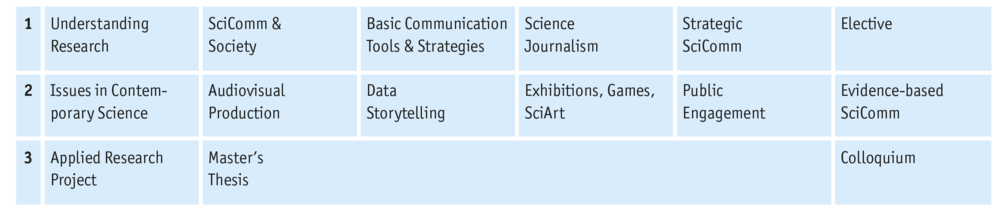
Study and practice traditional communication through text, audio and video, as well as innovative approaches such as data visualization, virtual reality, or game and exhibition design.
-
Learn what distinguishes good from bad-quality research. This includes understanding different research study designs and challenges like p-hacking, publication bias or predatory publishing.
-
Learn to communicate uncertainty and the process of scientific discovery as an honest broker without under- or overstating scientific findings, and to find ways to connect with audiences who are skeptical of the findings of credible science.
-
Know how to make your own communication more reliable, for example by pre-publication fact checking or by addressing biases or conflicts of interest.
-
Understand how to involve your audience through public engagement projects, and explore what communication research has found about which communication strategies are the most effective.
-
Case studies and international guest speakers will allow you to connect what you have learned to the real world and show you the many possible career paths.
-
In your Master's thesis you'll either showcase what you've learned in a larger communication project that will become part of your portfolio for job applications, or you'll conduct an academic study to answer a communication research question with practical relevance for working journalists or science communicators.
Zoom-Webinar
25 June, 2.00–3.00 pm: How to Apply
9 July, 2.00–3.00 pm: How to Apply for a Visa
Mona Jantjes is inviting you to a scheduled Zoom meeting.
Join the Zoom meeting:
https://hs-ansbach-de.zoom.us/j/68678869370?pwd=BvyhIqfKQCzgDqQQmvqjc3FfWMiskq.1
Meeting-Chat-Link
https://hs-ansbach-de.zoom.us/launch/jc/68678869370
Meeting-ID: 686 7886 9370
Kenncode: 821614
Join via SIP:
• 68678869370(at)fr.zmeu.us
Join –> How to do it
| Short form | SCO |
| Type of study | Full time |
| Standard length of study | 3 semesters |
| Degree awarded | Master of Science (M.Sc.) |
| Start first semester | Fall (winter semester; classes start October 1) |
| Admission restriction | specific (see here) |
| Tuition Fee | for non-EU nationals: 1000 € per term |
| Application period | May 2 - September 15 |
| Location | Ansbach, Germany |
| Course Language | English |
| Course director | Prof. Dr. Andreas von Bubnoff |
| Student advice (specific) | Prof. Dr. Andreas von Bubnoff |
| Student advice (general) | Student advice (general) study(at)hs-ansbach.de |
You can upload your application materials between May 2 - June 30, 2026, so the upload link is available at that time. We're looking for people passionate about science and storytelling from diverse backgrounds, ranging from recent science or social science and humanities undergraduates all the way to working scientists or even artists. What you'll need:
- A university degree with a grade of 2.5 or better (Bachelor's, Diplom, Magister, state examination) totalling 180 ECTS in relevant fields such as natural or social sciences, humanities, communication, journalism or art. (Applicants with fewer than 210 ECTS must complete additional coursework or internships or submit proof of relevant professional
experience to make up the difference by the 2nd semester.) -
Master application from abroad
International applicants will foreign academic degrees will need a preliminary review documentation (VPD, German for "Vorprüfungsdokumentation)" from an organization called “uni-assist.de”. Uni-assist will translate your previous international academic degrees into the German gradling system. Because this usually takes 4–6 weeks, we recommend that you start the VPD process as soon as possible (you can start at any time, even before the start of the Ansbach University of Applied Sciences application period). You will then use the uni-assist report to apply at the "PRIMUSS" application portal at Ansbach University of Applied Sciences. Try your best to submit the VPD to us by the end of July; after that it may be too late to arrange your visa before classes start on October 1st. -
Proof of English proficiency at C1 level (IELTS 7.0 or TOEFL 100). This is usually not needed if your university entrance qualification is from a country where the primary official language is English (e.g., the UK, the US, Australia, or New Zealand). Please contact us at study(at)hs-ansbach.de if you aren’t sure or have any questions.
-
Starting 2026 international applicants don't need to show proof of German-language skills to apply.
-
A portfolio (see HERE) of at least three, ideally published, examples of science communication directed at non-expert audiences (these can be articles, videos, podcasts, or creative projects).
- A motivation letter of up to 1,000 words in English explaining why you wish to enter the field of science communication, how your previous experience has influenced this decision, and what you expect to gain from a Master's degree in this field.
Here is a link to a detailed description of the application procedures and to an FAQ list.
- Assess the quality of scientific studies based on research study design, keeping in mind challenges like p-hacking, publication bias or predatory publishing.
- Improve the reliability of their own communication by applying strategies like pre-publication fact checking.
- Adapt communication tools and strategies to different use cases, publics and audiences by using text, audio, video, data visualization, immersive approaches, game design or exhibition design.
- Understand the different ethical and practical challenges that distinguish strategic communication (communicate to persuade) from journalistic communication (communicate to inform).
- Develop public engagement campaigns and risk and crisis communication strategies.
- Apply findings from communication research to make their communication strategies more effective.
- Science journalism
- Public relations for companies, non-profits, think tanks or governments
- Advertising in areas that use scientific knowledge (for example medical)
- Science diplomacy
- Exhibition design in places like museums
- SciArt (communicating science through art)
- Public engagement
- Game design
For specific questions about the course, please contact course director Prof. Dr. Andreas von Bubnoff at andreas.von-bubnoff(at)hs-ansbach.de.
Staff

Prof. Dr. Andreas von Bubnoff
Studiengangsleitung Master Wissenschaftskommunikation (SCO; Englisch) / Director Master’s Program Science Communication (SCO; English)
0981 4877-418 50.4.5 nach Vereinbarung / by appointment andreas.von-bubnoff(at)hs-ansbach.de vCard
Prof. Dr. Andreas von Bubnoff

Studiengangsleitung Master Wissenschaftskommunikation (SCO; Englisch) / Director Master’s Program Science Communication (SCO; English)
Funktionen:
- Professor Fakultät Medien / Professor Faculty of Media
- Studiengangsleitung Master Wissenschaftskommunikation (SCO; Englisch) / Director Master’s Program Science Communication (SCO; English)
- Professor Bachelor Ressortjournalismus (RJO; Deutsch) / Professor Bachelor Departmental Journalism (RJO; German)
- Praktikumsbeauftragter Bachelor Ressortjournalismus (RJO; Deutsch) / Internship Coordinator Bachelor Beat Journalism (RJO; German)
Lehrgebiete:
- Journalismus & Wissenschaftskommunikation / Teaching areas Journalism & Science Communication
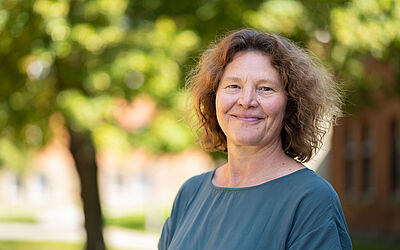
Ulrike Stroh
Fakultätsassistentin Medien
0981 4877-591 92.2.1 nach Vereinbarung ulrike.stroh vCard
Ulrike Stroh
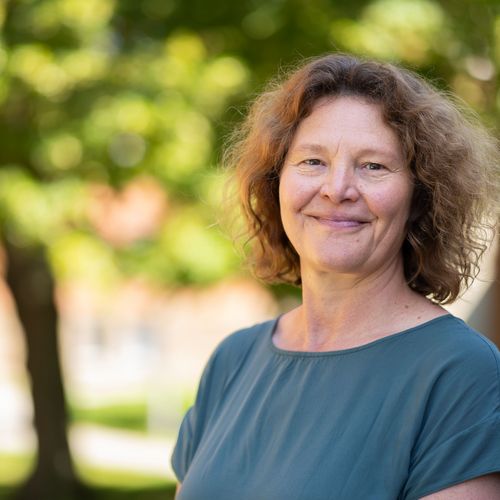
Fakultätsassistentin Medien
Funktionen:
- Fakultätsassistentin Medien
Betreute Studiengänge:
- Produktionsmanagement Film und TV (PMF)
- Science Communication (SCO)
© 2026 Hochschule Ansbach