
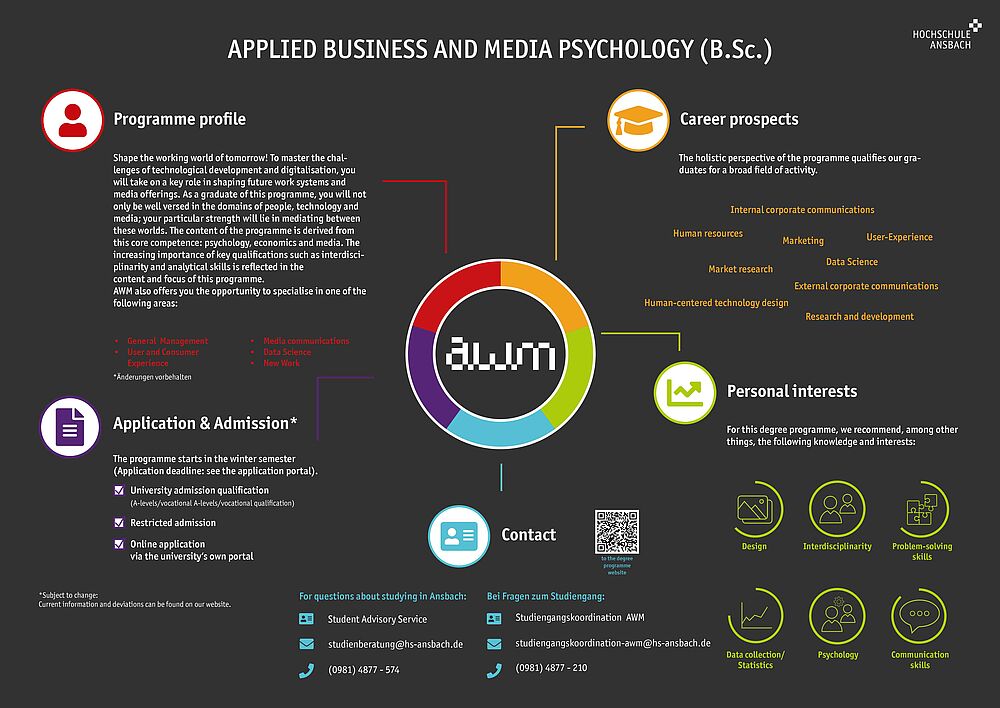
The Bachelor's degree programme in Applied Business and Media Psychology (AWM) focuses on specific knowledge and skills from the fields of business and media studies in addition to the relevant fundamentals of psychology. The main aim is to promote interdisciplinary skills in the fields of business and media psychology.
The Bachelor's degree programme in Applied Business and Media Psychology addresses this interdisciplinary interface between the three fields of psychology, business and media and addresses the requirements of the modern labour market.
The aim is to train interdisciplinary experts who have structured and analytical ways of thinking in order to design economic business and media offers, implement them and successfully optimise them using their psychological expertise. The Applied Business and Media Psychology programme prepares students to work as business and media psychologists in a variety of fields.
It is important to note that the AWM degree programme is not the same as a traditional psychology degree and therefore does not provide a qualification for dealing with mentally ill people.

| Short form | AWM |
| Type of study | Full time |
| Admission restrictions | yes |
| Standard period of study | 7 semester |
| Award | Bachelor of Arts (B.Sc.) |
| Start of studies | Winter semester |
| Lecture location | Ansbach |
| Language of instruction | German |
| Organisational questions | studiengangskoordination-awm(at)hs-ansbach.de |
| Course management | Prof. Dr. Barbara Kühnlenz |
| Student advisory service | Prof. Dr. Barbara Kühnlenz studienfachberatung.awm(at)hs-ansbach.de |
In the Bachelor's programme in Applied Economics and Media Psychology, students acquire fundamental methodological and theoretical knowledge as well as a broad base of content in the first semesters. The focus is on three core competencies:
- Economics
- Media Studies
- Psychology
Structure of the first semesters
The first three semesters are primarily devoted to acquiring methodological and theoretical foundations and preparing students for two practice-oriented research projects in the fourth and fifth semesters.
Advanced study and application
Starting in the fourth semester, practical projects and advanced specialisation modules in the fields of economic and media psychology are offered. These enable students to further develop their knowledge and build their profile in a targeted manner.
Practical semester
The sixth semester includes a career-oriented internship that provides intensive insight into the working world. This practical semester can be completed at home or abroad and provides a solid foundation for a wide range of career fields.
Elective area
In the elective area, students have the opportunity to set their own priorities, depending on their individual interests and strengths. The practical orientation runs through the entire programme and provides targeted preparation for later career entry.
Bachelor's thesis
The seventh semester is devoted to the Bachelor's thesis, in which the knowledge acquired is applied and deepened in an independent project.
![[Translate to English:] AWM-Studierende](/fileadmin/_processed_/a/3/csm_AWM-1_28f0ec3236.jpg)
![[Translate to English:] AWM-Studierende](/fileadmin/_processed_/6/0/csm_AWM-2_39be5ae6a6.jpg)

Between the two main subjects of business psychology and media psychology, the programme offers a wide range of specialisations for in-depth study. Currently, students can choose between:
![[Translate to English:] New Work](/fileadmin/_processed_/6/9/csm_new-work_f460757658.png)


This diversity enables you to work in different areas of business and industries after graduation. The programme aims to provide you with sound psychological methods that you can use to effectively integrate scientific findings into business processes.
In addition to technical, methodological and practical skills, you will also acquire individual key qualifications and social skills, which you will gain in particular through a variety of elective modules.
The bachelor's degree programme in Applied Business and Media Psychology addresses this interdisciplinary interface between the three fields of psychology, business and media, responding to the demands of the modern job market.
Career goal: The programme aims to produce interdisciplinary experts who possess structured and analytical thinking skills, enabling them to design and implement economic business and media offerings and successfully optimise them using their psychological expertise.
In order to prepare students optimally for an international career, some modules are offered exclusively in English. English is not only the language of science, but also the basis for communication in international economic relations.
The Bachelor's programme in Applied Business and Media Psychology provides students with a broad foundation in the disciplines of business and media studies, as well as comprehensive knowledge of application-oriented psychology.
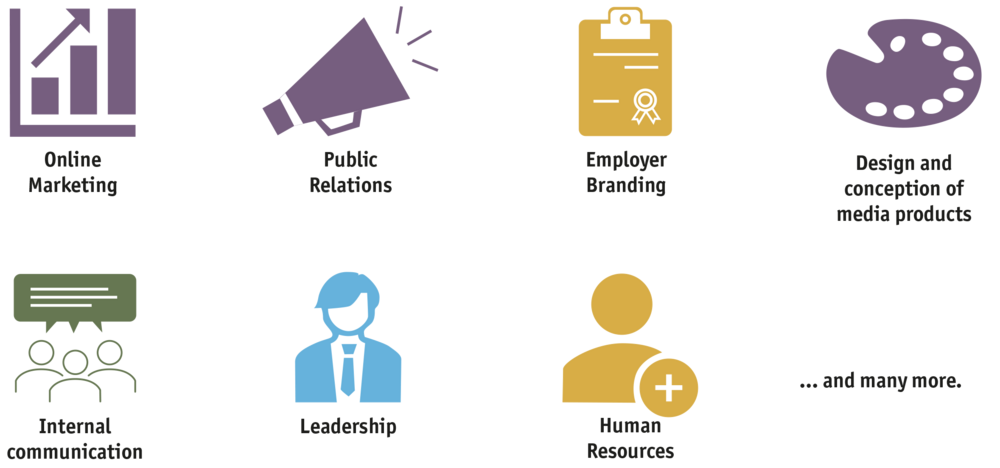
This holistic perspective qualifies our future graduates for a wide range of fields of activity. Our students go on to work in areas such as public relations, internal communication, design and conception of media products, online marketing, market research and evaluation, data science, organisational development, human resources, employer branding, change management, leadership and many other positions. Not to be forgotten are business areas that do not even exist at the moment (keyword: human-robot interaction). Especially in times of digital change, there is a strong demand for graduates with an interdisciplinary range of skills that make them versatile in companies.
AWM Moments
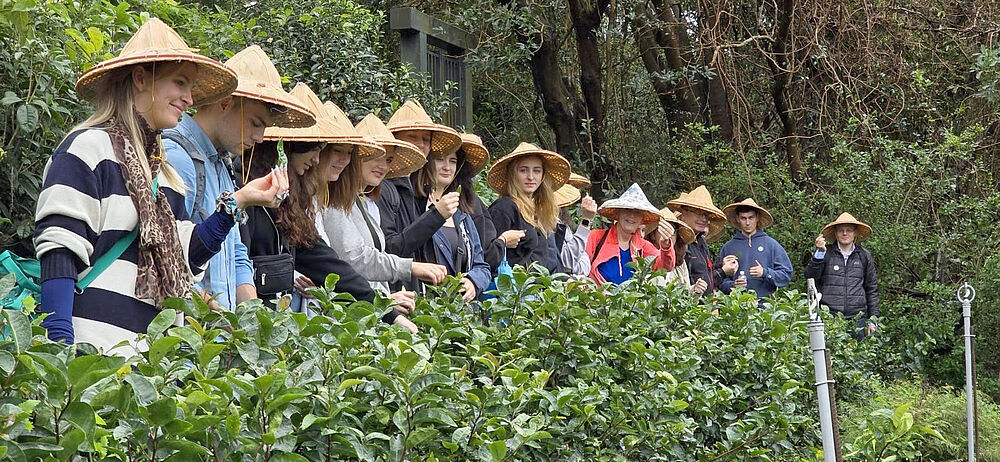
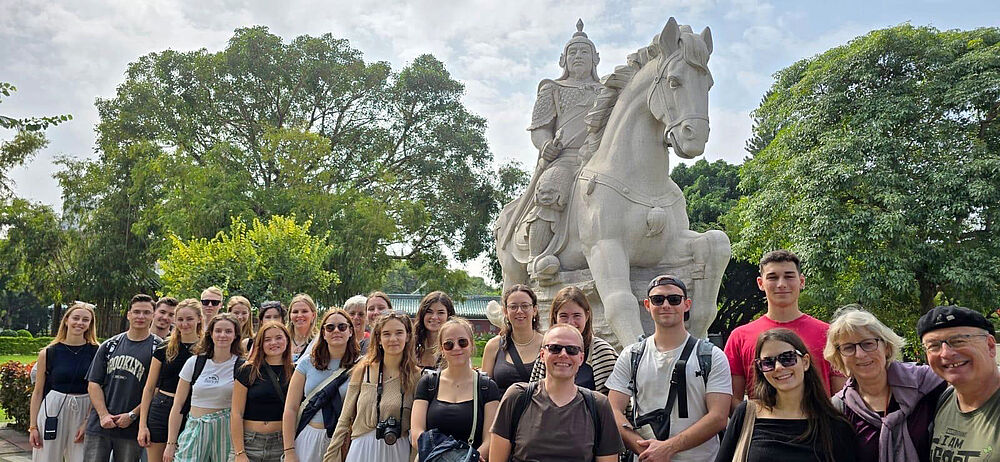
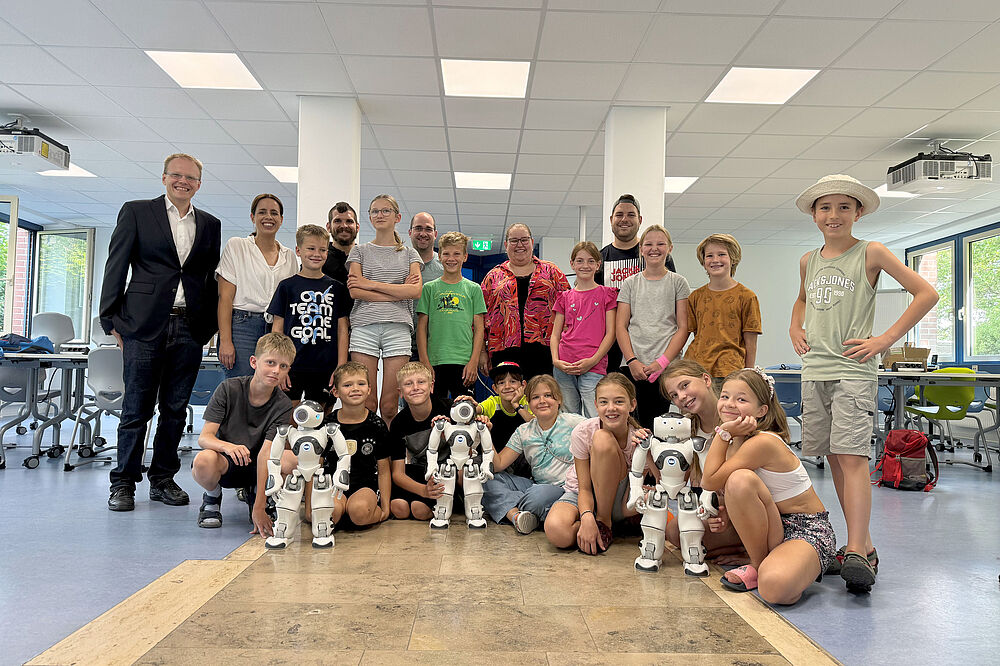
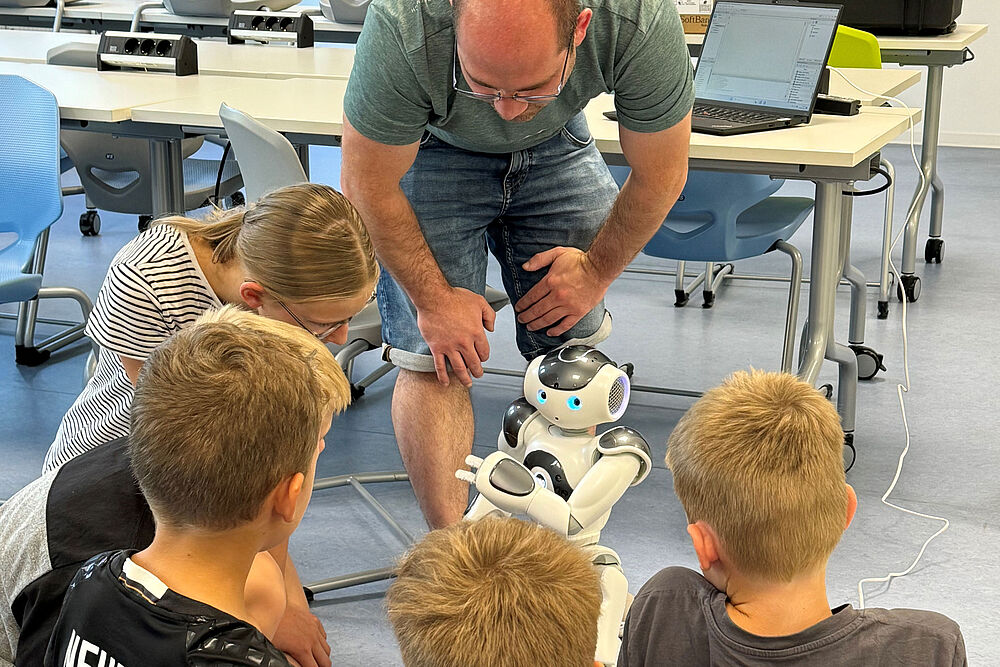
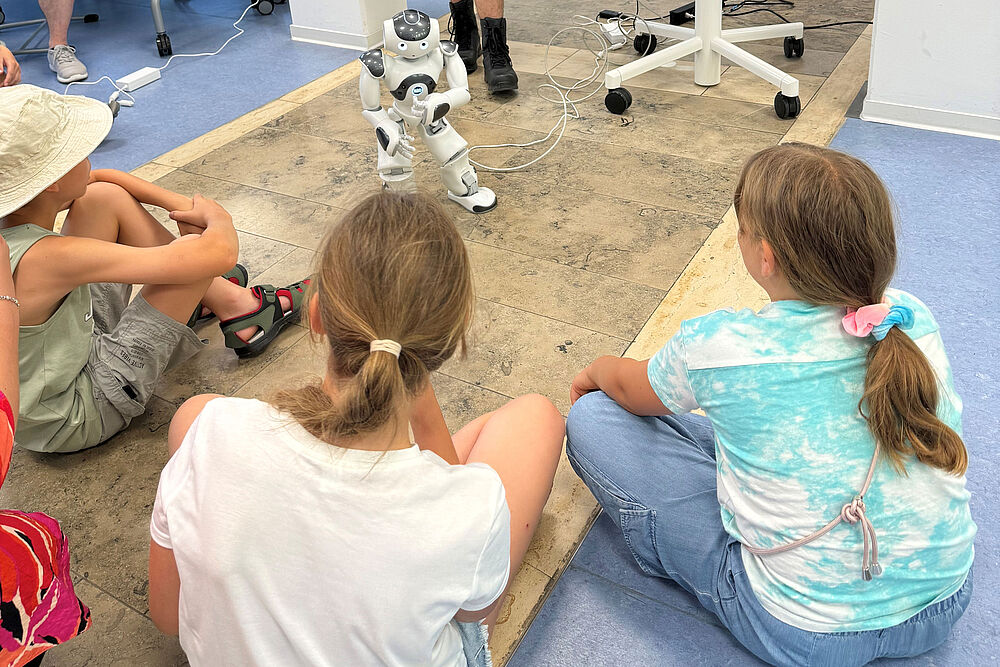
The Applied Business and Media Psychology programme thrives on moments that go beyond traditional studies. In AWM Moments, we show what makes the programme special – whether it's looking beyond the horizon at international cultures or interacting with young visitors to the university.
AWM International stands for education with a global perspective. Students experience exciting and enriching excursions to companies and institutions at home and abroad. In addition, there is the opportunity to spend a
semester abroad at one of our partner universities. Intercultural events at the university also offer the chance to learn new perspectives and further develop one's own skills. In this way, AWM promotes thinking beyond borders and prepares students for a networked, international working environment.
Young visitors have also been given the opportunity to take a look behind the scenes of the degree programme. For example, a cooperation with the Ansbach authorities took place during the summer holiday programme on the topic of artificial intelligence and social robots – an exciting day for everyone involved.
Frequently asked questions (and answers) from prospective students about the AWM degree programme
-
Question: When is the application deadline for the degree programme "Applied Business and Media Psychology"?
Answer: Please check the deadlines on the homepage of the Ansbach University of Applied Sciences website or on the page for prospective students. - Question: Can I also apply to start the degree programme "Applied Business and Media Psychology" in the summer semester?
Answer: All application options for the coming semester can be found on the university's own application portal.
In principle, only applications for higher semesters (not first semesters) are possible for the summer semester. -
Question: What literature do you recommend to make it easier to start studying?
Answer: Basically, your lecturers will provide you with sufficient literature. A good overview of the basics of psychology is provided by Zimbardo's textbook, for example. -
Question: What job and career opportunities does this degree programme offer?
Answer: Please read the information on the programme page on the Ansbach University of Applied Sciences website. -
Question: Can I study a Master's programme in psychology or business administration after completing a Bachelor's degree?
Answer: A Bachelor's degree generally qualifies you for a Master's programme. However, you must pay attention to the specific admission requirements of the Master's programme. This is regulated by the college/university that accepts you. -
Question: I have a special request for which I have not found any answers on the pages of Ansbach University of Applied Sciences. Where can I get an answer?
Answer: Please contact the General Student Advisory Service. -
Question: I have questions about the content of the programme; who can I contact?
Answer: Please first read the information on the programme page. Then contact the programme director Prof. Dr. Patrick Gröner. -
Question: Is this degree programme subject to admission restrictions or what is the NC?
Answer: Yes, admission to this degree programme will be restricted from winter semester 2021/2022. Here, admission is based on the (subject) Abitur grade. Which grade forms the cut-off grade here depends on the number of applicants and their respective grade point averages. We are therefore unable to provide any information on this. -
Question: Is there a selection procedure / test?
Answer: No, there is no selection procedure or test. -
Question: I have a typical question about starting my studies (e.g. campus map, living in Ansbach, dates); where can I find information on this?
Answer: Please check the homepage or the Service section. -
Question: Can AWM be studied dual?
Answer: Yes, the degree programme can be studied dual, either as a degree programme with in-depth practice or as a combined degree programme. Prospective students usually look for a training / practice partner themselves. You can find all the information here. -
Question: What is the difference between AWM and a "normal" psychology Bachelor's programme?
Answer: An undergraduate Bachelor's degree in psychology invests significantly more time in specialised basic subjects such as developmental psychology, differential psychology or biopsychology. In contrast, the AWM degree programme is clearly more application-oriented and (only) in this sense it prepares students more early and specifically for a career. -
Question: Question: Does it make sense to do a Master's degree in Business Psychology after graduating from AWM?
Answer: If the career profile of business psychology is a clear goal, then a Master's programme following AWM can make sense. However, it is important to check that the Master's programme builds on AWM in a meaningful way and that there is not too much overlap. A sensible option may also be to choose a degree programme in a related professional field, such as marketing, human resources or digital transformation. Finally, a sensible third option is to deepen your knowledge in the focus areas that AWM offers, such as data science or usability topics, as part of a Master's programme.
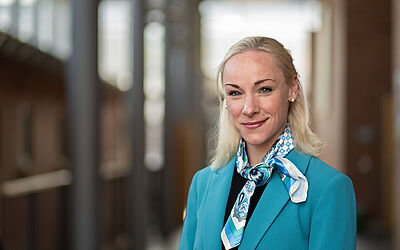
Prof. Dr. Barbara Kühnlenz
Studiengangsleitung Angewandte Wirtschafts- und Medienpsychologie (AWM)
0981 4877-209 66.1.13 nach Vereinbarung barbara.kuehnlenz vCard
Prof. Dr. Barbara Kühnlenz
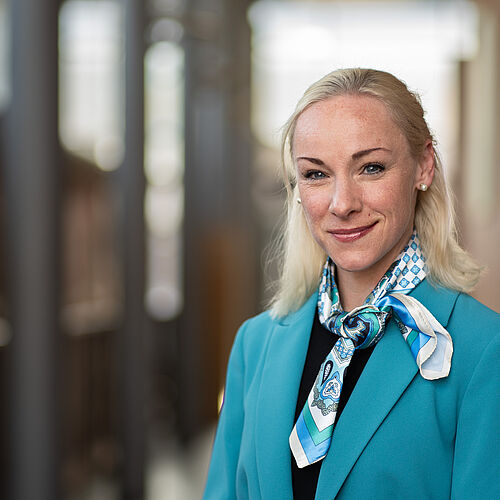
Studiengangsleitung Angewandte Wirtschafts- und Medienpsychologie (AWM)
Funktion
- Studiengangsleitung Angewandte Wirtschafts- und Medienpsychologie (AWM)
- Studienfachberatung Angewandte Wirtschafts- und Medienpsychologie (AWM)
Prof. Dr. habil. Sebastian Sauer
Professor Angewandte Wirtschafts- und Medienpsychologie (AWM)
0162 2152724 50.2.18 Dienstags, 10 Uhr (bitte vorher anmelden) sebastian.sauer vCard
Prof. Dr. habil. Sebastian Sauer
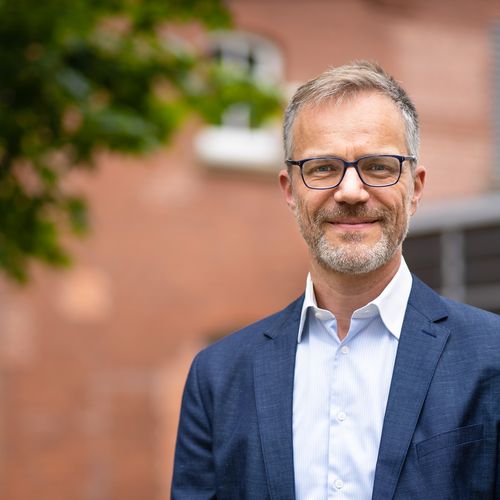
Professor Angewandte Wirtschafts- und Medienpsychologie (AWM)
Funktionen:
- Dekan Fakultät Wirtschaft
- Professor Angewandte Wirtschafts- und Medienpsychologie (AWM)
- Professor Internationales Management (BIM, Spitzensportler)
- Professor für Wirtschaftspsychologie mit Schwerpunkt Data Science
Lehrgebiete
- Statistik
- Data Science
- Forschungsmethoden
Forschungsinteressen:
- Anwendung von Data-Science-Methoden in wirtschaftlichen und sozialwissenschaftlichen Fragestellungen
Kurzvita
Ausbildung:
- Studium: Diplom-Psychologie mit Schwerpunkt Arbeits- und Organisationspsychologie an den Universitäten Landau und Madrid
- Promotion und Habilitation zum Thema Achtsamkeit
Berufliche Tätigkeiten:
- Unternehmensberater im Bereich Post-Merger-Integration (TowersPerrin Inc., Frankfurt am Main)
- Referatsleitung Wissensmanagement und Personalentwicklung (MDK Bayern, München)
- Entwicklung und Evaluationen von Technologien im Bereich Ambient-Assisted-Living (Peter-Schilffarth-Institut, Bad Tölz und Universität München)
- Seit 2014 Professor für Wirtschaftspsychologie mit Schwerpunkt Statistik und Data Science
- Seit 2019 Studiengangsleitung im Studiengang Angewandte Wirtschafts- und Medienpsychologie (AWM) and der Hochschule Ansbach
Persönliche Webseite:
Publikationsliste:
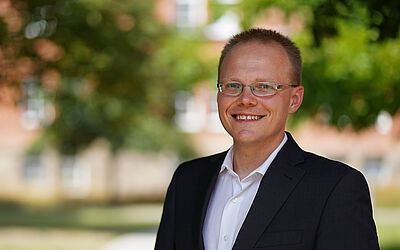
Prof. Dr. Patrick Gröner
Professor Angewandte Wirtschafts- und Medienpsychologie (AWM)
66.1.7 Termin nach Vereinbarung patrick.groener vCard
Prof. Dr. Patrick Gröner
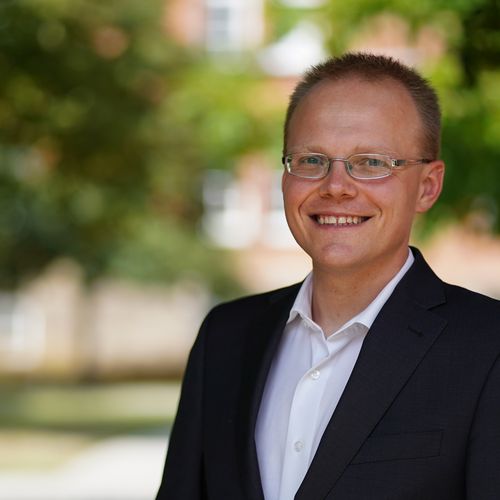
Professor Angewandte Wirtschafts- und Medienpsychologie (AWM)
Funktion
- Professor Angewandte Wirtschafts- und Medienpsychologie (AWM)
Prof. Dr. Simon Gollisch
Professor Angewandte Wirtschafts- und Medienpsychologie (AWM)
+49 (0)162 2066351 66.1.12 Termin nach Vereinbarung simon.gollisch vCard
Prof. Dr. Simon Gollisch
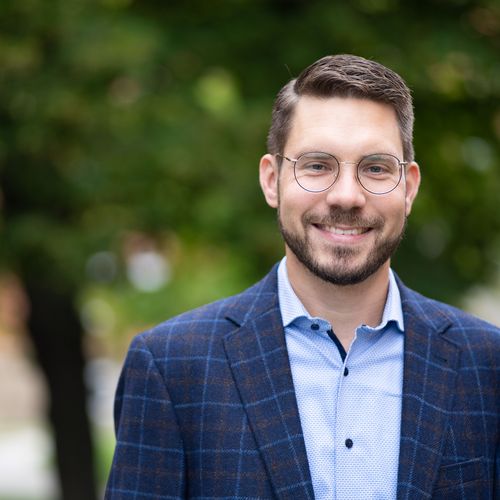
Professor Angewandte Wirtschafts- und Medienpsychologie (AWM)
Funktionen:
- Professor Betriebswirtschaft (BW)
- Professor Angewandte Wirtschafts- und Medienpsychologie (AWM)
- Professor Innovation und Entrepreneurship (IUE)
- Studiengangsleitung Master Innovation & Entrepreneurship (IUE)
- Mitglied des Fakultätsrats Wirtschaft
Lehrgebiete:
- Allgemeine Betriebswirtschaftslehre
- Strategie
- Digitalisierung
- Management
- Entrepreneurship
Forschungsinteressen
- (Strategisches) Management
- Managerial Cognition & Performance Feedback
- Entrepreneurship & Innovation
- (Digitale) Wertschöpfungsprozesse
Vita
2008-2013: Studium der Betriebswirtschaft (B.A.) und der Unternehmensführung (M.A.) an den Hochschulen Ansbach und Konstanz
2014-2017: Wissenschaftlicher Mitarbeiter & Lehrbeauftragter an der Hochschule Ansbach
2017: Promotion zum Dr. rer. pol. an der Georg-August-Universität Göttingen
2018: Forschungssemester an der Simon Fraser University, Vancouver
2018-2021: Referent Strategie/Assistent des Vorstands bei einem international führenden Maschinenbauunternehmen
Seit 2021: Professor für Allgemeine Betriebswirtschaftslehre, insbesondere Strategieentwicklung und digitale Geschäftsprozesse an der Hochschule Ansbach
Weitere Informationen finden Sie hier.
Publikationen in referierten Fachzeitschriften:
07/22
Blettner, Daniela/Gollisch, Simon (2022): The role of reference points and organizational identity in strategic adaptation to performance feedback. Management Research Review, Special Issue on Behavioral Strategy.
06/18
Gollisch, Simon/Hedderich, Barbara/Theuvsen, Ludwig (2018): Strategien im Wandel: Theoretische Überlegungen und empirische Hinweise für eine Mikrofundierung des strategischen Managements, in: Die Unternehmung 72 (2), S. 169-191.
01/18
Gollisch, Simon/Hedderich, Barbara/Theuvsen, Ludwig (2018): Strategic Preferences of Farm Supply and Grain Elevator Businesses: Empirical Evidence from Germany, in: International Journal on Foodsystem Dynamics 9 (1), S. 54-66.
05/15
Gollisch, Simon/Theuvsen, Ludwig (2015): Risikomanagement im Landhandel: Charakteristika, Herausforderungen, Implikationen, in: Berichte über Landwirtschaft, Band 93, Heft 1, S. 1-16.
Sonstige Publikationen
02/21
Gollisch, Simon/Theuvsen Ludwig (2021): Einführung, in: GenoAkademie/ Burg Warberg (Hrsg.): Agrarhandel: Fachwissen in Fragen und Antworten, Agrimedia, 7. Aufl., Clenze, S. 9-15.
02/20
Skripek, Markus/Gollisch, Simon (2020): Welche Faktoren beeinflussen die Nutzung von Social Media im Vertrieb von B2B-Unternehmen in Deutschland?, in: Ambrosius, Ute/Gröner, Patrick (Hrsg.): Ansbacher Kaleidoskop 2020, Shaker Verlag, Aachen, S. 82-97.
07/18
Gollisch, Simon (2018): Strategisches Risikomanagement im Landhandel, Diss., Cuvillier Verlag, Göttingen.
09/17
Gollisch, Simon/Hedderich, Barbara/Theuvsen, Ludwig (2017): Strategische Entscheidungspräferenzen im Landhandel, in: Agrargewerbe Intern 2 (3), S. 12-13.
11/16
Gollisch, Simon/Hedderich, Barbara/Theuvsen, Ludwig (2016): Reference Points and Risky Decision Making in Agricultural Trade Firms: A Case Study in Germany, Diskussionspapier Nr. 1609 des Departments für Agrarökonomie und Rurale Entwicklung, Universität Göttingen.
10/16
Ambrosius, Ute/Gollisch, Simon (2016) (Hrsg.): Ansbacher Kaleidoskop 2016, Shaker Verlag, Aachen.
10/16
Gollisch, Simon/Theuvsen, Ludwig (2016): Strategisches Risikomanage-ment: Theoretische Grundlagen und Perspektiven für die angewandte Managementforschung, in: Ambrosius, Ute/Gollisch, Simon (Hrsg.): Ansbacher Kaleidoskop 2016, Shaker Verlag, Aachen, S. 29-54.
Vorträge
08/20
Blettner, Daniela/Gollisch, Simon (2020): Reference Points as Drivers of Strategic Adaptation: An Exploratory Study, Vortrag auf dem 80th Annual Virtual Meeting of the Academy of Management vom 7.-11. August 2020.
07/18
Gollisch, Simon/Blettner, Daniela (2018): The Interplay of Reference Points and Organizational Identity in Strategic Adaptation to Performance Feedback, Vortrag auf dem „34th EGOS Colloquium“ der European Group of Organizational Studies vom 5.-7. Juli 2018 in Tallinn, Estland.
11/16
Gollisch, Simon (2016): Der private Landhandel im Wandel: Ergebnisse einer Branchenumfrage, Vortrag anlässlich der „Chefgespräche“ des Bundesverbandes der Agrargewerblichen Wirtschaft am 30.11.2016 auf der Burg Warberg.
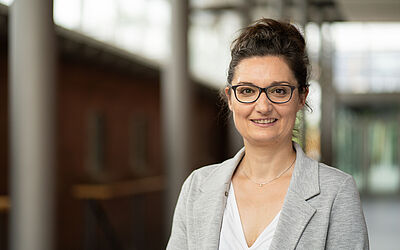
Prof. Dr. Katharina Klug
Professorin Angewandte Wirtschafts- und Medienpsychologie (AWM)
+49 (0)981 4877-374 66.1.13 Termin nach Vereinbarung katharina.klug vCard
Prof. Dr. Katharina Klug
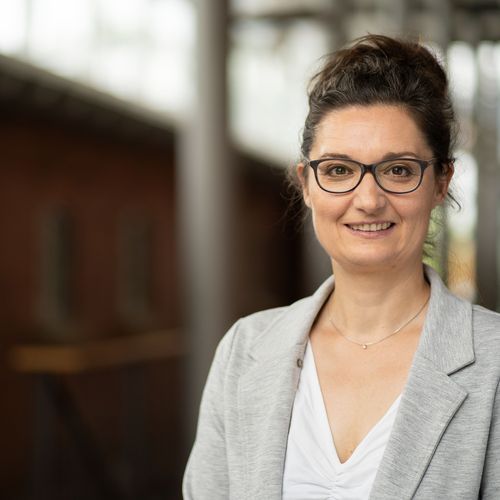
Professorin Angewandte Wirtschafts- und Medienpsychologie (AWM)
Funktion
- Forschungsbeauftragte Fakultät Wirtschaft
- Professorin Angewandte Wirtschafts- und Medienpsychologie (AWM)
Lehrgebiete
Angewandte Marktforschung, Konsumpsychologie, User & Consumer Experience, wissenschaftliches Arbeiten
Kurzvita
Katharina Klug (geb. Hutter) ist Professorin für Wirtschaftspsychologie, insb. Markt- und Kaufpsychologie. Vor ihrer Tätigkeit in Ansbach war sie Professorin für Marketing an der Fresenius Hochschule (Fachbereich Design, AMD) in München. Zuvor verantwortete sie die Servicemarktforschung der AOK PLUS in Dresden und war wissenschaftliche Mitarbeiterin am Marketinglehrstuhl der TU Dresden. Sie arbeitete zudem als Marketingmanagerin im Agenturgeschäft und für verschiedene Unternehmen. Katharina Klug studierte Betriebswirtschaftslehre an der TU Dresden sowie der Università degli Studi di Trento (Italien) und promovierte an der Christian-Albrechts-Universität zu Kiel.
Schwerpunkte ihrer Lehr- und Forschungstätigkeit sind nachhaltiges Konsumentenverhalten, unkonventionelle Kommunikations- und Retail-Strategien (z.B. Guerilla Marketing) sowie innovative Emotionsmessung und empathische Mensch-Maschine-Interaktion. Für ihre Forschung bedient Sie sich sowohl qualitativer als auch quantitativ-empirischer Untersuchungs- und Analysemethoden. Sie publiziert zu Themen wie Sustainable Consumption, Pop-up Retail, Affective Computing und Digital Empathy in Fachzeitschriften und referiert auf nationalen und internationalen Marketing-Konferenzen.
Vollständige Publikationsliste
GoogleScholar-Profil
Research Gate-Profil
Ausgewählte Publikationen:
Zeitschriften
- Klug, K.; Bietmann, L. (2026). Zwischen Ästhetik und Authentizität: Die Wirkung digitaler Perfektion von KI-Influencern in der Unternehmenskommunikation, HMD - Praxis der Wirtschaftsinformatik, 63(3), online first, https://doi.org/10.1365/s40702-026-01257-0
- Hahn, A., Klug, K., Meier, M. Schiele, N.,& Weigel, F. (2026). Regression Trees for Ad Campaigns - Optimizing Online Ad Spendings, Marketing Review St. Gallen, 3/2026, 76-84. https://imc.unisg.ch/shop/marketing-review-st-gallen-3-2026-sustainable-marketing/
- Joosten, J., Klug, K., Hahn, A., Bilgram, V. Ideation (2024): Die Qualität von menschengenerierten und KI-generierten Ideen im Vergleich, transfer – Zeitschrift, 70 (4), 18-23.
- Joosten, J., Hahn, A., Klug, K., Riedmüller, F., & Totzek, D. (2024). Toward a Digital Empathy Framework: Evaluating User Experience Research Methods, Marketing Review St. Gallen, 5/2024, 80-87.
- Ahnfeld, T., Hahn, A., Josten, J., Klug, K., & Totzek, D. (2023). Testing Social Media Advertising Effectiveness witz Multi-Method User Experience Research, Marketing Review St. Gallen, 06/2023, 32-39.
- Hahn, A., & Klug, K. (2023). Generative Models as a Catalyst for Rapid Digital Prototyping, Digitale Welt, online first 3. Mai 2023, https://digitaleweltmagazin.de/fachbeitrag/generative-models-as-a-catalyst-for-rapid-digital-prototyping/
- Klug, K., & Niemand, T. (2021). The lifestyle of sustainability: Testing a behavioral measure of precycling, Journal of Cleaner Production, 297, https://doi.org/10.1016/j.jclepro.2021.126699.
Monografien
Klug, K. (2018): Vom Nischentrend zum Lebensstil - Der Einfluss des Lebensstils auf das Konsumentenverhalten. Springer: Wiesbaden.
Hutter, K.; Hoffmann, S. (2014): Professionelles Guerilla-Marketing: Grundlagen – Instrumente – Controlling, Springer Gabler: Wiesbaden.
Beiträge in Herausgeberbänden
- Klug, K. (2026). Generative KI im Marketing: Ein systematischer Überblick über Potenziale und Her-ausforderungen einer nutzerzentrierten Integration im Innovationsprozess, in Schuster, G. & Bornemeyer, C. (Hrsg.): Handbuch Innovatives Marketing, Springer, https://link.springer.com/rwe/10.1007/978-3-658-46709-8_63-1
- Hahn, A., Klug, K., Joosten, J., & Bilgram, V. (2026). Embracing digital empathy: Emotion AI – Concept, use cases, and developments. In G. Hofbauer (Ed.), Artificial intelligence in business and engineering (pp. 51–67). Kohlhammer. https://doi.org/10.17433/978-3-17-046743-9
- Joosten, J.; Hahn, A.; Klug, K. Customer Centricity Research Methoden (2025). Wie sich User Experience (besser) messen lässt, in Arica, M; Friedrich, K.; Hiemeyer, W.-D.; Stumpf, M. (Hrsg.) Marketing & Sales Innovation 2026: Einsatzmöglichkeiten von KI in Marketing und Vertrieb, S. 85-98, Springer: Wiesbaden; https://link.springer.com/chapter/10.1007/978-3-658-49537-4_5
Konferenzen
- Klug, K.; Riemann, J.; & Schäfer, R. (2026). Künstlich, aber authentisch? Eine explorative Studie zur Wirkung von (KI-) Science Influencern, paper accepted for the conference Europäische Kulturen in der Wirtschaftskommunikation (EUKO) 2026, in Aachen (Germany), 22.-24.10.2026, https://www.euko2026.rwth-aachen.de/go/id/bojiln/
- Kühnlenz, B.; Klug, K.; Lutz, L.; König, E., Matisic, M.; Leutz, M.; Piazza, A., & Kühnlenz, K. (2026). Establishing Perceived Safety, Trust and raising subjective Performance by positive Priming and Providing Cognitive Control in Healthcare-HRI: A Pilot Study in an Anamnesis Robot Scenario, accepted for IEEE Conference on Advanced Robotics and its Social Impact (ARSO), June 10-12, 2026, Vienna, Austria.
- Klug, K.; Kühnlenz, B. (2026). Toward a Didactic Framework on Scientific Teaching in HRI: The Scientific HRI Didactic Framework (SHRI-DiF), paper accepted for the conference Robotics in Education (RiE) 2026, in Wolfenbüttel (Germany) , 15-17. 04. 2026, https://rie.science/2026/index.html
- Klug, K.; Riemann, J. (2026). Sport-Tracking-Apps im Fokus: Wie soziale Funktionen und User Experience die Motivation zum Sport beeinflussen, paper accepted for the Conference dvs-Tagung Sport und Raum 2026 "Informelle Sport- und Bewegungsräume: Chancen und Herausforderungen", in Erlangen (Germany), March 12-23, 2026.https://www.sport.fau.de/dvs-tagung-maerz-2026/
- Riemann, J.; Klug, K.; Christ, L.; Stadler, S. (2025). Impact of Social Features on User Experience in Sport Tracking Applications, paper accepted for the CHIuXiD2025 Conference, in Bali (Indonesia), December 5.6, 2025.
- Klug, K.; Niemand, T.; Geissmer, J. (2025). Zero waste@Coffee to go: How precycling fosters sustainable consumption, paper accepted for the 2025 ICAR Conference, in Montreal (Canada), October 2nd-3rd, 2025.

Prof. Dr. Magdalena Molina
Professorin Angewandte Wirtschafts- und Medienpsychologie (AWM)
0981 4877-268 66.1.7 nach Vereinbarung magdalena.molina vCard
Prof. Dr. Magdalena Molina
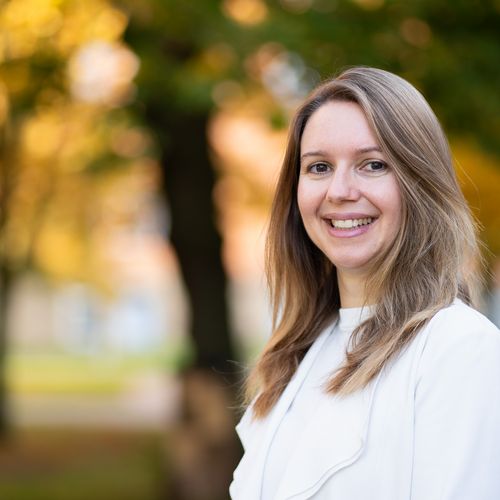
Professorin Angewandte Wirtschafts- und Medienpsychologie (AWM)
Funktion
- Praktikumsbeauftragte Angewandte Wirtschafts- und Medienpsychologie (AWM)
- Professorin Angewandte Wirtschafts- und Medienpsychologie (AWM)
- Professorin für Wirtschaftspsychologie, insb. Personal und Organisation
- Mitglied Senat
- Beauftragte der Hochschule für die Gleichstellung von Frauen in Wissenschaft und Kunst
Prof. Dr. Melanie Verhovnik-Heinze
Professorin Angewandte Wirtschafts- und Medienpsychologie (AWM)
0981 4877-363 66.1.11 montags 13:30–14:15 Uhr nach vorheriger Anmeldung per E-Mail m.verhovnik-heinze vCard
Prof. Dr. Melanie Verhovnik-Heinze
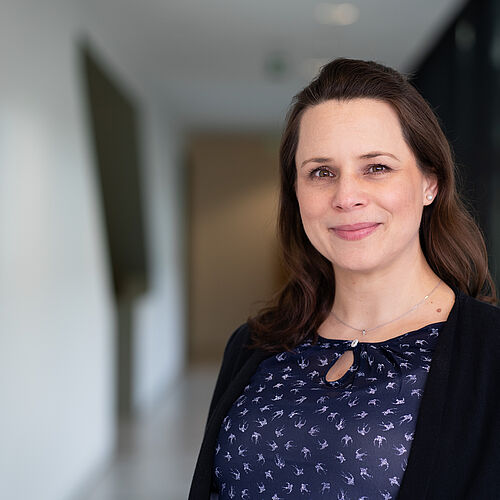
0981 4877-363
66.1.11
montags 13:30–14:15 Uhr nach vorheriger Anmeldung per E-Mail
m.verhovnik-heinze
vCard
Professorin Angewandte Wirtschafts- und Medienpsychologie (AWM)
Funktionen
Professorin im Studiengang
Angewandte Wirtschafts- und Medienpsychologie (AWM)
AWM-Auslandsbeauftragte
Lehrgebiete
- Medientheorie- und praxis
- Praxisfelder Medienpsychologie
- Qualitative Sozialforschung
- Schwerpunkt Medienkommunikation
Prof. Dr. Sarah Schöllhammer
Professorin Angewandte Wirtschafts- und Medienpsychologie (AWM)
66.1.12 nach Vereinbarung sarah.schoellhammer vCard
Prof. Dr. Sarah Schöllhammer
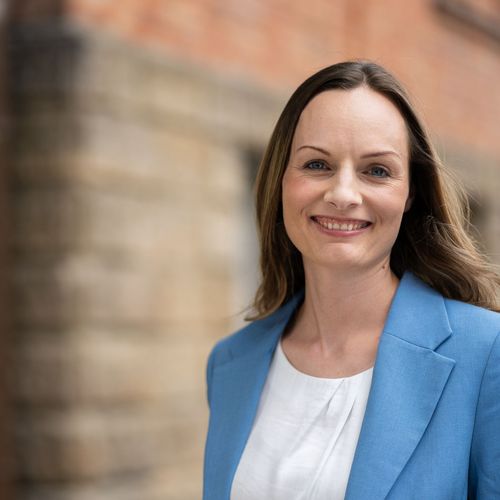
Professorin Angewandte Wirtschafts- und Medienpsychologie (AWM)
Funktionen:
- Professorin Innovation und Entrepreneurship (IUE)
- Studiengangsleitung Master Innovation & Entrepreneurship (IUE)
- Studienfachberatung Master Innovation & Entrepreneurship (IUE)
- Professorin Angewandte Wirtschafts- und Medienpsychologie (AWM)
Lehrgebiete:
- Innovation & Entrepreneurship
- Organisation & Change Management
- Organizational Behavior
- Management
Akademischer und beruflicher Werdegang
Sarah Schöllhammer ist Professorin für Innovation und Entrepreneurship an der Hochschule Ansbach. Sie studierte International Management und Innovationsmanagement in Dublin, Deggendorf und Esslingen und promovierte in Glasgow.
Sie verfügt über fundierte Praxiserfahrung im Themenfeld Innovation und Entrepreneurship - aus Sicht der Wissenschaft, des Marketings und der Technik, Konzern- und Inkubator-Perspektive, operativ und strategisch. Als wissenschaftliche Mitarbeiterin an der Universität Stuttgart/Fraunhofer IAO verband sie angewandte Forschung mit Industrieberatung. Weitere Erfahrung sammelte sie als Innovationsmanagerin und Projektleiterin in der Automobilzulieferindustrie, zunächst im Marketing der global operierenden Dräxlmaier Group, dann beim Joint-Venture und Corporate Incubator Intedis. Ihre Forschungsschwerpunkte sind Innovation in modernen Organisationsformen sowie agile Methoden für Innovation & Entrepreneurship.
Monografien
Schöllhammer, S. (2024) Anpacken und Tee trinken: Impulse aus Innovationsforschung, Buddhismus und Positiver Psychologie. Paderborn: Junfermann.
Schoellhammer, S. (2020) Innovation Exposed: Case Studies of Strategy, Organization and Culture in Heterarchies. Wiesbaden: Springer Gabler.
Fachartikel (Peer reviewed)
Lechner, A. und Schöllhammer, S. (2025). Geteilte Führung für mehr Vielfalt. ZfO Zeitschrift Führung + Organisation (08/2025).
Schöllhammer, S. (2020) Innovativ im Kollektiv – Von heterarchischen Organisationen für die Innovationspraxis lernen. Zfo Zeitschrift Führung + Organisation (04/2020).
Schoellhammer, S. und Gibb, S. (2019) Collectively Innovating; Modelling Responsible Exposure in Heterarchical Organizations. International Journal of Innovation Science. Jg. 12 Nr. 1, S. 127-141.
Konferenzbeiträge (Peer reviewed)
Schoellhammer, S. und Gibb, S. (2017) Enabling Rather Than Managing: Innovation Mechanisms in Heterarchical SMEs. RENT XXXI Research in Entrepreneurship and Small Business. Lund, Schweden, 15-17 November 2017.
Schoellhammer, S. und Orcik, A. (2014) The Uebermorgenwerkstatt: Co-creating a shared, customizable innovation process for collaborative development projects. 21st International Product Development Management Conference. Limerick, Irland, 15-17 Juli 2014.
Wissenschaftliche Poster
Schöllhammer, S., Nickel, T. und Storzum, N. (2024) Zukunftskompetenzen durch hautnahes Erleben – Konzeption und prototypische Umsetzung eines virtuellen Escape Games für die Hochschullehre. Tag der digitalen Lehre 2024. Regensburg, 24.09.2024.
Zeitschriftenartikel
Schöllhammer, S. (2014) „Das Neue“ systematisch fördern. mav - Innovation in der spanenden Fertigung, April 2014, S. 22-25.
Bullinger, H.-J. und Schöllhammer, S. (2014) Die Kräfte bündeln für Innovationen: Vertrauen und gelebte Werte als strategische Ressourcen. INNOVATIONS-FORUM, Sonderausgabe Open Innovation 2014, S. 10-11.
Dr. Christian Alexander Gebhard
Lehrkraft für besondere Aufgaben
0981 4877-108 50.4.7 nur nach Anmeldung, mittwochs von 13:15 bis 14:15 Uhr in meinem Büro 50.4.7 c.gebhard vCard
Dr. Christian Alexander Gebhard
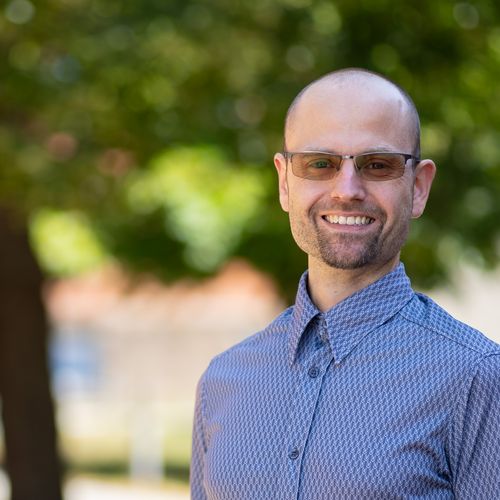
0981 4877-108
50.4.7
nur nach Anmeldung, mittwochs von 13:15 bis 14:15 Uhr in meinem Büro 50.4.7
c.gebhard
vCard
Lehrkraft für besondere Aufgaben
Fuktionen:
- Leiter China-Kompetenzzentrum
- Lehrkraft für besondere Aufgaben (AWM, BWL, Sprachen)
Lehrgebiete:
- Interkulturelles Management China
- Allgemeines Spanisch
- Wirtschaftsspanisch
- Wirtschaftsenglisch
- Allgemeines Chinesisch
- Wirtschaftschinesisch
Publikationen:
2025. A Preliminary Look into the Profiles of Adult Learners of Chinese in German-Speaking Countries. Fremdsprachen und Hochschule (FuH), 101. https://ojs.ub.rub.de/index.php/FuH/article/view/12168/12169.
2024a. A New Perspective on Chinese Language Capital in International Business. Proceedings of the 50th Anniversary Conference of the European International Business Academy (EIBA) 2024: 181–182Presented at the 50th Anniversary Conference of the European International Business Academy (EIBA). Aalto.
2024b. Fremdsprachenunterricht im digitalen Lernraum: Internationalisierung zu Hause. In J. Noller, C. Beitz-Radzio, M. Förg, S. E. Johst, D. Kugelmann, S. Sontheimer, et al. (Eds.), Medien-Räume: 61–82. https://link.springer.com/10.1007/978-3-658-43047-4_5. Wiesbaden: Springer Fachmedien Wiesbaden.
2024c. The race for China expertise. 5th International Conference Business Meets Technology. Valencia, 13th-15th July 2023: 205–215. https://gdocu.upv.es/alfresco/service/api/node/content/workspace/SpacesStore/e8c6bc60-fc51-46ed-bf59-892bef4bdade/6672.pdf?guest=true edUPV.
2022a. Wie gehen Chinesischlernende mit Hànyǔ Pīnyīn um? Eine Fehleranalyse im Anfängerunterricht. In D. Wippermann (Ed.), Hanyu Pinyin in der Didaktik der chinesischen Sprache und Zeichenschrift: 175–198. München: Iudicium Verlag.
2022b. Who attends our foreign language courses? A preliminary look into the profile of learners of Chinese. 4th International Conference Business Meets Technology Ansbach, 7th – 9th July 2022: 256-265. https://ocs.editorial.upv.es/index.php/BMT/BMT2022/paper/viewFile/15328/7504 edUPV
2021a. The Necessity to Make Errors: The case of German learners of Spanish. In M. R. Perello Marín, C. Carrascosa López, & D. Catalá Pérez (Eds.), Proceedings 3rd International Conference. Business Meets Technology: 61–68Presented at the 3rd International Conference. Business Meets Technology http://ocs.editorial.upv.es/index.php/BMT/BMT2021/paper/view/13612. Editorial Universitat Politècnica de València.
2021c. Exkursion nach China: chinesische Lesetexte für Fortgeschrittene. Gröbenzell, Deutschland: Hefei Huang Verlag.
2020a. Portfolios as Performance Records in a Reflective Approach in Teaching Chinese as a Foreign Language. In B. Hedderich, M. A. Hedderich, & M. S. J. Walter (Eds.), Business meets technology 2: proceedings of the 2nd International Conference of the University of Applied Sciences Ansbach 3rd - 4th of July 2020: 22–25Presented at the Hochschule Ansbach. Düren: Shaker Verlag.
2020b. Awareness of the Belt and Road Initiative in Small and Medium Sized Enterprises in Middle Franconia. Business Meets Technology 2. Proceedings of the 2nd International Conference of the University of Applied Sciences Ansbach 3rd – 4th of July 2020: 127–130. Düren: Shaker.
2020c. Some Suggestions for Teaching Foreign Languages Online. In B. Hedderich, M. A. Hedderich, & M. S. J. Walter (Eds.), Business meets technology 2: proceedings of the 2nd International Conference of the University of Applied Sciences Ansbach 3rd - 4th of July 2020: 18–21Presented at the Hochschule Ansbach. Düren: Shaker Verlag.
2020d. An Error Analysis of Beginners’ Oral Exams of German learners of Chinese. In U. Ambrosius & P. Gröner (Eds.), Ansbacher Kaleidoskop 2020: 64–81. Aachen: Shaker Verlag.
2020e. Das Lernportfolio als Leistungsnachweis im Chinesischunterricht. CHUN Chinesisch Unterricht, 35: 86–102.
2019a. Häufige Fehler in der schriftlichen Produktion erwachsener Lernender des Spanischen im Anfängerstadium. In D. Reimann, F. Robles i Sabater, & R. Sánchez Prieto (Eds.), Kontrastive Pragmatik in Forschung und Vermittlung. Deutsch, Spanisch und Portugiesisch im Vergleich: 265–286. Tübingen: Narr Francke Attempto.
2019b. Trainingsbuch der deutschen Sprache. Lehrwerk – Texte und Aufgaben. LOGO-Praktikanten in Deutschland und wo sie zu finden sind. LOGO e.V.
2018a. Gesten im Chinesischunterricht. Interkulturelle Kompetenz: Die Forderungen der Bildungsstandards und ihre Verwirklichung im Unterricht, 7: 65–73.
2018b. Foreign Language Learners’ Frequent Errors: An Investigation of Chinese and Spanish. In B. Hedderich, M. S. J. Walter, & P. M. Gröner (Eds.), Business meets technology. Proceedings of the 1st International Conference of the University of Applied Sciences Ansbach: 25th to 27th January 2018: 76–79.
2018c. Praxisbericht: Interkulturelles Video-Tandem an der Hochschule Ansbach. Zeitschrift für Interkulturellen Fremdsprachenunterricht 23(1): 149-154. https://zif.tujournals.ulb.tu-darmstadt.de/article/id/3147/
2016a. Häufige Fehler erwachsener Lerner des Chinesischen im Anfängerstadium, Chinesisch Unterricht 31: 30–50.
2016b. Spanisch an der Hochschule Ansbach: Häufige Fehler in der schriftlichen Produktion. In U. Ambrosius & S. Gollisch (Eds.), Ansbacher Kaleidoskop 2016: 169–188. Herzogenrath: Shaker.
2015. Rezension: Weber, Hui: Lóng neu A1-A2. Chinesisch für Anfänger (Komplettpaket). CHUN - Chinesisch-Unterricht, 30: 102–106.
2014a. Eine Übersicht über spielerische kooperative Lernformen im Chinesischunterricht. CHUN - Chinesisch-Unterricht, 29: 86–100.
2014b. El uso de medios comunicativos no verbales en programas de noticias alemanes, españoles y portugueses. In D. Reimann (Ed.), Kontrastive Linguistik und Fremdsprachendidaktik Iberoromanisch – Deutsch: Studien zu Morphosyntax, Mediensprache, Lexikographie und Mehrsprachigkeitsdidaktik (Spanisch, Portugiesisch, Katalanisch, Deutsch): 183–198. Tübingen: Narr Francke Attempto.
2012a. La velocidad articulatoria sujeta a la estructura silábica. In N. M. Iglesias Iglesias (Ed.), Contrastivica II: Aktuelle Studien zur Kontrastiven Linguistik Deutsch-Spanisch-Portugiesisch II: 23–43. Hannover: ibidem-Verlag.
2012b. Sprechtempo im Sprachvergleich: Eine Untersuchung phonologischer und kultureller Aspekte anhand von Nachrichtensendungen. PhD dissertation. Berlin: Humboldt-Universität zu Berlin.
2011. A velocidade de articulação sujeita a estruturas silábicas predominantes: português brasileiro e português europeu em contraste. In M. Arden, C. Märzhäuser, B. Meisnitzer, & W. Abraham (Eds.), Linguística do português: rumos e pontes: 137–150. Presented at the Deutscher Lusitanistentag. München: Meidenbauer.
Co-author: Zhang, M., 2018. Wirtschaftskorrespondenz Chinesisch: zielsicher formulieren - erfolgreich handeln. Uitikon-Waldegg, Schweiz: chinabooks.ch.
Co-author: Mahúgo Cardenes, M. del C., 2018. Learning Strategies of German University Students of Spanish as a Foreign Language: Profile of the Independent Learner in a European Context. In B. Hedderich, M. S. J. Walter, & P. Gröner (Eds.), Business meets technology: proceedings of the 1st International Conference of the University of Applied Sciences Ansbach: 25th to 27th January 2018: 90–93. Presented at the Hochschule Ansbach. Aachen: Shaker Verlag.
Co-author: Baudracco-Kastner, M., 2024. Virtuelle Lernräume als Orte der Begegnung: Zweckmäßige Onlineformate nach der Pandemie sinnvoll einsetzen. In S. Gollisch & P. Gröner (Eds.), Ansbacher Kaleidoskop 2024 Festschrift zum 60. Geburtstag von Prof. Dr. Ute Ambrosius und Prof. Dr. Barbara Hedderich : 72–97. Düren: Shaker.
Co-author: Baudracco-Kastner, M. 2022. We’re more equal on Zoom: Inclusion and personal relations in the virtual classroom. Why we shouldn’t abandon what we’ve learned in the pandemic. In B. Hedderich, M. Walter, S. Stadler, E. Didion, M. R. Perello Marín, & D. Catalá Pérez (Eds.), Proceedings - 4th International Conference Business Meets Technology 2022: 286–302. Presented at the 4th International Conference. Business Meets Technology. http://ocs.editorial.upv.es/index.php/BMT/BMT2022/paper/view/15324. Editorial Universitat Politècnica de València.

Prof. Dr. Dominik Kögel
Professor Betriebswirtschaft (BW)
0162 2605459 50.3.6 nach Vereinbarung dominik.koegel vCard
Prof. Dr. Dominik Kögel

Professor Betriebswirtschaft (BW)
Funktionen:
- Professor Betriebswirtschaft (BW)
- Professor Internationales Produkt- und Servicemanagement (IPM)
Lehrgebiete:
- Unternehmertum
- Innovation
- Projektmanagement
- Strategisches Management
- Digitale/Innovative Geschäftsmodelle
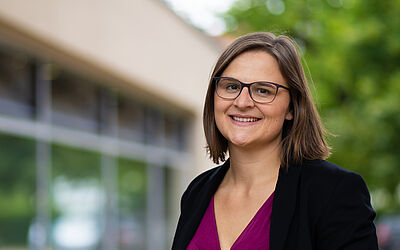
Prof. Dr. Christine Dauth
Professor Betriebswirtschaft (BW)
0981 4877-216 50.3.16 nach Vereinbarung christine.dauth vCard
Prof. Dr. Christine Dauth
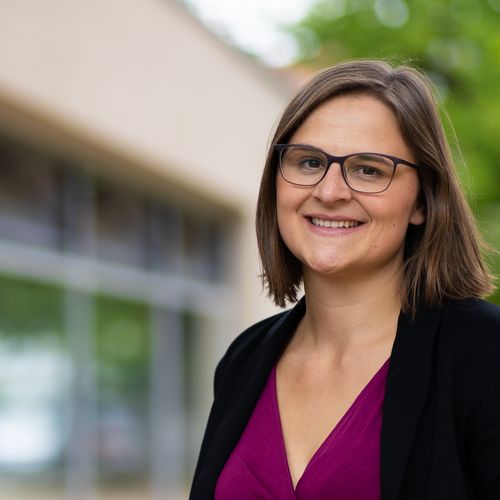
Professor Betriebswirtschaft (BW)
Funktionen:
- Studien- und Prodekanin der Fakultät Wirtschaft
- Mitglied des Fakultätsrats der Fakultät Wirtschaft
- Professorin in den Studiengängen BW, AWM, BIM und im Rahmen des Promotionsbegleitzertifikats
Lehrgebiet:
- Statistik und quantitative Methoden
- Datenanalyse mit R
- Volkswirtschaftslehre
- Arbeitsmarktökonomik
- Gute wissenschaftliche Praxis
Beruflicher Werdegang
Christine Dauth ist seit September 2021 Professorin für Statistical Modeling und Business Analysis an der Hochschule Ansbach. Davor war sie wissenschaftliche Mitarbeiterin am Institut für Arbeitsmarkt- und Berufsforschung (IAB) der Bundesagentur für Arbeit in Nürnberg. Dort sammelte sie Berufserfahrung im Bereich der angewandten Arbeitsmarktforschung und wissenschaftlichen Politikberatung. Sie studierte von 2005 bis 2010 Volkswirtschaftslehre an der Universität Erlangen-Nürnberg und am Institut d’Etudes Politiques in Straßburg. Als Kollegiatin im gemeinsamen Graduiertenprogramm des IAB und der Universität Erlangen-Nürnberg promovierte sie im Oktober 2015.
Lehre und Forschung
Forschungsgebiete
Empirische Arbeitsmarktökonomik, insbesondere Weiterbildungsforschung, Evaluation aktiver Arbeitsmarktpolitik, Pflegebeschäftigung und Geschlechterungleichheiten
Überblicke über aktuelle Forschungsvorhaben und bisherige Publikationen finden sich hier:
Ausführlicher Lebenslauf Persönliche Homepage
Lehrveranstaltungen
Im Wintersemester 2025/2026
- Arbeitsmarktökonomik (Bachelor Betriebswirtschaft, Angewandte Wirtschafts- und Medienpsychologie, Ressortjournalismus)
- Empirische Wirtschaftsanalyse mit R (Bachelor Betriebswirtschaft, Angewandte Wirtschafts- und Medienpsychologie)
- Statistik/ Quantitative Methoden I (Bachelor Betriebswirtschaft und Angewandte Wirtschafts- und Medienpsychologie)
Betreuung von Bachelor- und Masterarbeiten
Ich betreue empirische Bachelor- und Masterarbeiten, vorzugsweise zu (arbeitsmarkt-) ökonomischen Themen. Sie sollten gute bis sehr gute Kenntnisse in Statistik mitbringen und haben idealerweise neben dem Pflichtmodul „Statistik“ ein anderes weiterführendes quantitatives Modul belegt, wie beispielsweise „Empirische Wirtschaftsanalyse mit R“ oder „Quantitative Methoden II“. Hier finden Sie eine Liste mit Themenvorschlägen. Gerne können Sie auch auf mich zukommen, wenn Sie eigene passende Themen haben oder eine Idee für eigene empirische Analysen zu einem der vorgeschlagenen Themen.
Publikationen
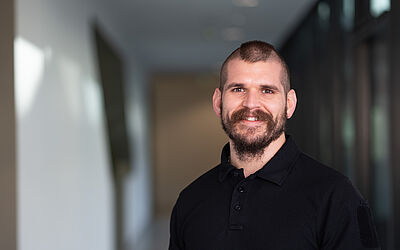
Matthias Erdmann
Wissenschaftlicher Mitarbeiter Angewandte Wirtschafts- und Medienpsychologie (AWM)
66.1.11 nach Vereinbarung matthias.erdmann vCard
Matthias Erdmann
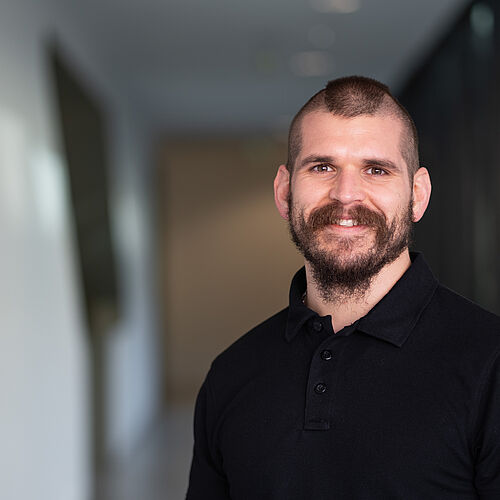
Wissenschaftlicher Mitarbeiter Angewandte Wirtschafts- und Medienpsychologie (AWM)
Funktion
- Wissenschaftlicher Mitarbeiter Angewandte Wirtschafts- und Medienpsychologie (AWM)
- Wissenschaftlicher Mitarbeiter Projekt SciTea
Franziska Hoffmann
Wissenschaftliche Mitarbeiterin Angewandte Wirtschafts- und Medienpsychologie (AWM)
0981 4877-516 66.1.11 nach Vereinbarung franziska.hoffmann vCard
Franziska Hoffmann
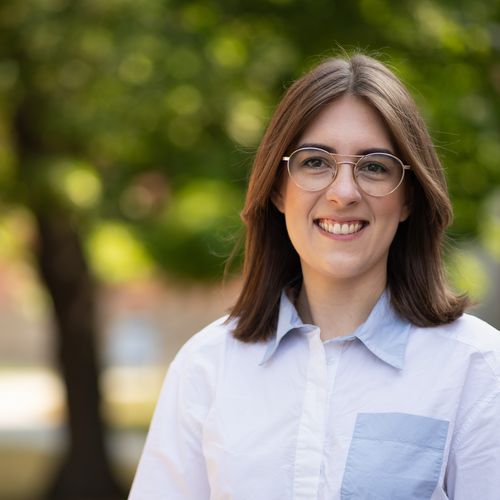
Wissenschaftliche Mitarbeiterin Angewandte Wirtschafts- und Medienpsychologie (AWM)
Funktionen:
-
Wissenschaftliche Mitarbeiterin Angewandte Wirtschafts- und Medienpsychologie (AWM)
Katharina Paetzold-Dave
Studierendenservice (AWM)
0981 4877-146 54.1.7 Termin nach Vereinbarung vCard
Katharina Paetzold-Dave
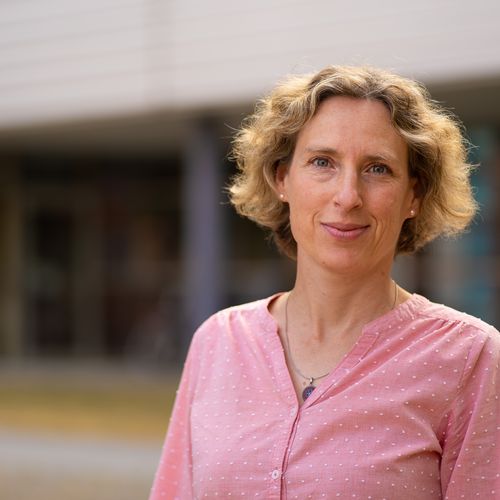
Studierendenservice (AWM)
Funktionen:
- Mitarbeiterin Bereich Studierendenservice
Betreute Studiengänge:
- Internationales Management (Spitzensportler)
- Angewandte Wirtschafts- und Medienpsychologie (AWM)
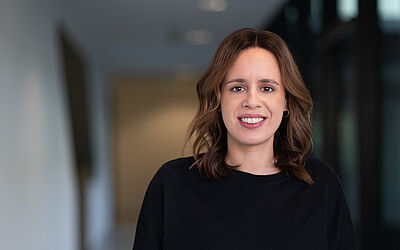
Franziska Kühn
Studiengangskoordination Angewandte Wirtschafts- und Medienpsychologie (AWM)
0981 4877-210, Mobil: +49 173 2146084 66.1.12 nach Vereinbarung franziska.kuehn(at)hs-ansbach.de; studiengangskoordination-awm(at)hs-ansbach.de vCard
Franziska Kühn
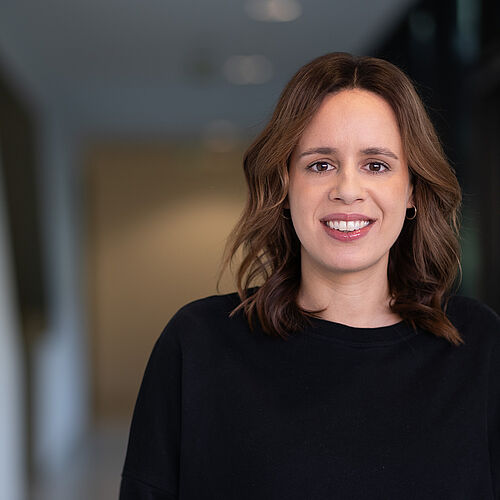
0981 4877-210, Mobil: +49 173 2146084
66.1.12
nach Vereinbarung
franziska.kuehn(at)hs-ansbach.de; studiengangskoordination-awm(at)hs-ansbach.de
vCard
Studiengangskoordination Angewandte Wirtschafts- und Medienpsychologie (AWM)
Funktionen:
- Laborbetreuerin Angewandte Wirtschafts- und Medienpsychologie (AWM)
- Studiengangskooridnation Angewandte Wirtschafts- und Medienpsychologie (AWM)

© 2026 Hochschule Ansbach