

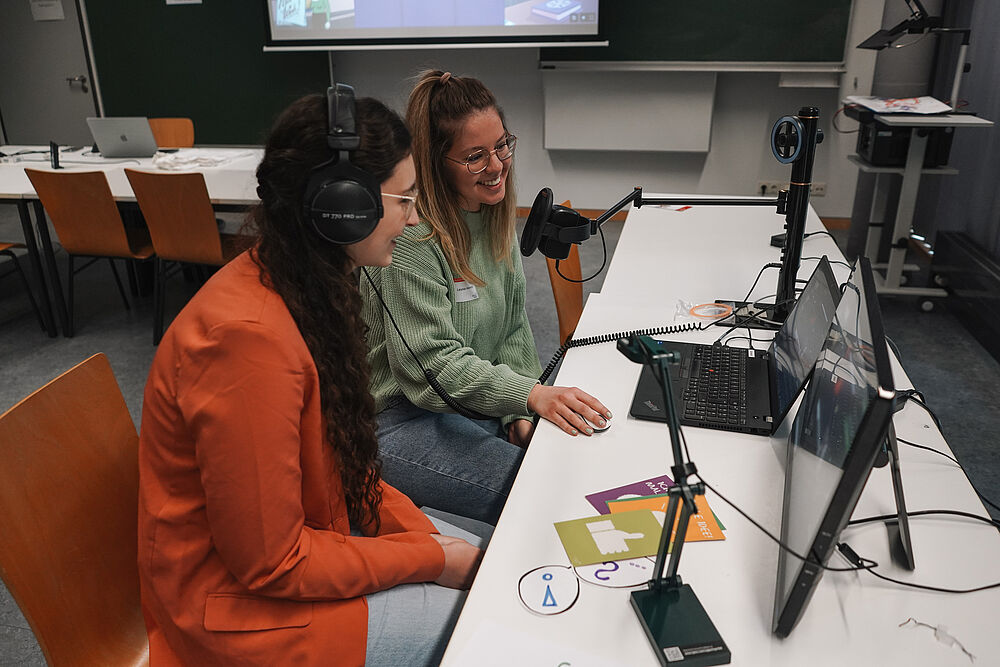
Shaping learning in the digital world of work
Welcome to the Master's degree programme in Digital Learning (DL). Here you will learn how to actively shape the future of digital learning! Not only will you develop the necessary didactic and methodological skills to design customised learning opportunities, but you will also be equipped with hands-on media skills. If you want to utilise the potential of virtual and physical learning spaces and successfully implement innovative projects in the education sector, this is the right place for you!
The broad-based curriculum opens up a wide range of professional opportunities. After completing the programme, you will be able to work operationally or strategically in the field of in-company training and further education, in personnel development, in e-learning agencies, in adult education, in media and publishing houses and in consulting.
Teaching takes place in a mix of online and face-to-face events, supplemented by self-study and project phases.
| Short form | DL / DLT |
| Type of study | Full time / Part time |
| Standard period of study | 3 semester / 6 semester |
| Admission restrictions | Master of Arts (M.A.) |
| Start of studies | Winter semester |
| Restriction on admission | Specific |
| Lecture location | Ansbach, virtual seminar room |
| Language of instruction | German |
| Course management | Prof. Dr. Verena Gerner |
| Student advisory service | Prof. Dr. Verena Gerner |
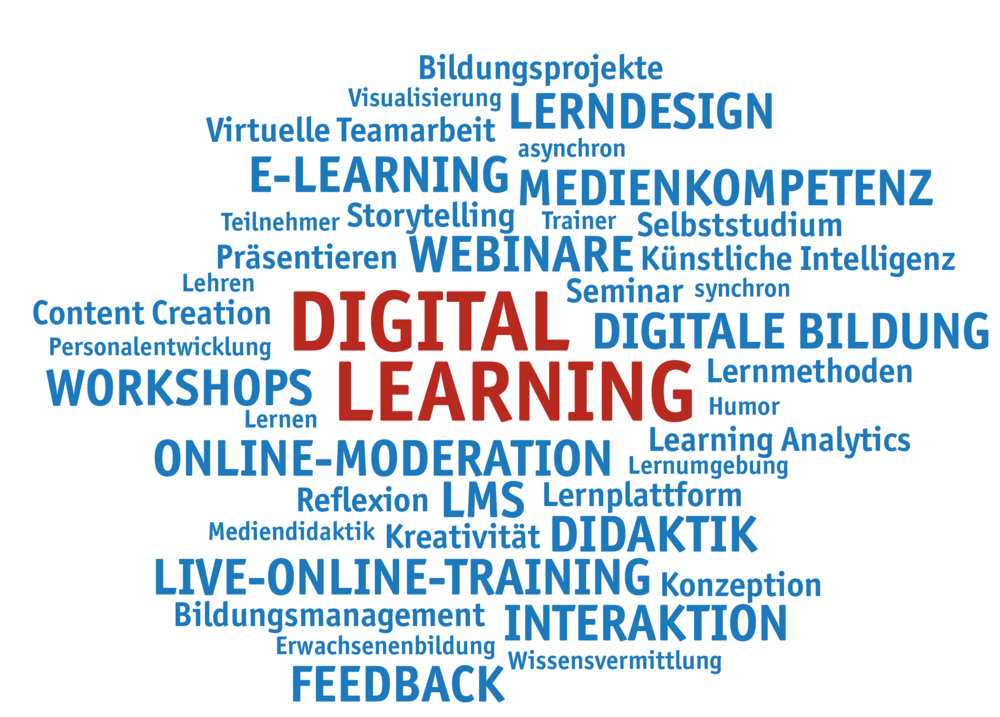
The Master's programme in Digital Learning is characterised by its strong practical focus. Particularly noteworthy is the ‘Practical Project’ module. In this module, students work on a real-world task in cooperation with a company and gain valuable project experience. Previous cooperation partners have included: AOK Bayern, ARD ZDF Medienakademie, Bosch Connected Industry, d&b Audiotechnik, DATEV, Denn's Biomarkt, Diakoneo, DIEHL Metering, Learning Digital, Nürnberg Digital Festival, velpTEC Edutainm.
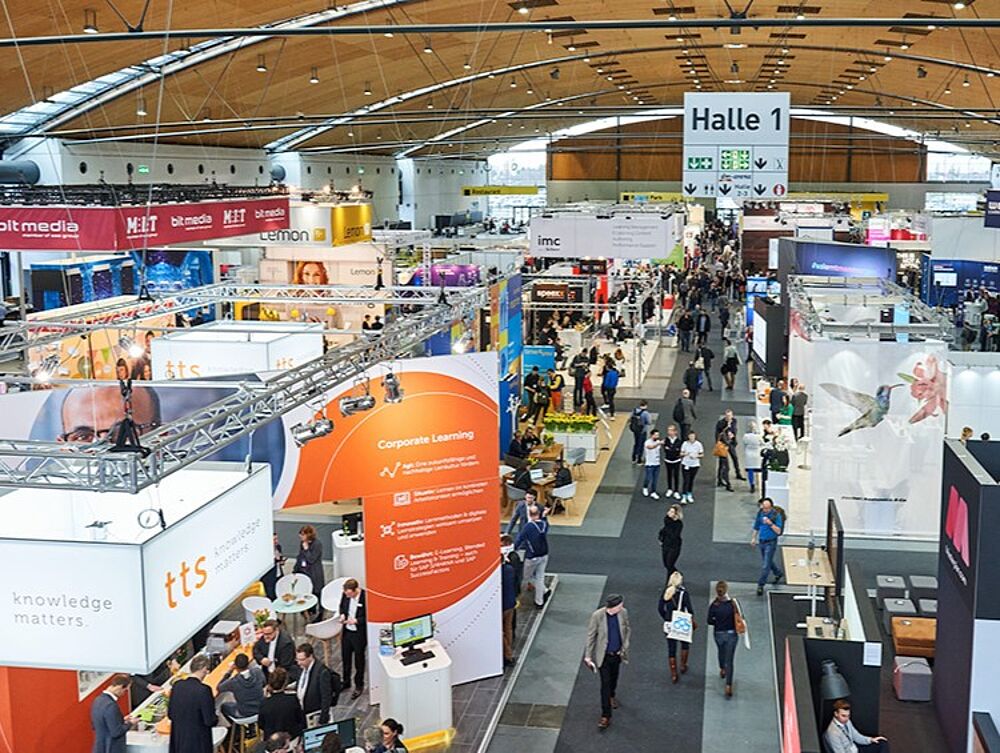
On the annual excursion to the Learntec trade fair, students gain an insight into technological innovations and make contacts with potential employers. Regular guest lectures by company representatives provide insights into current topics and solution strategies in the business environment.
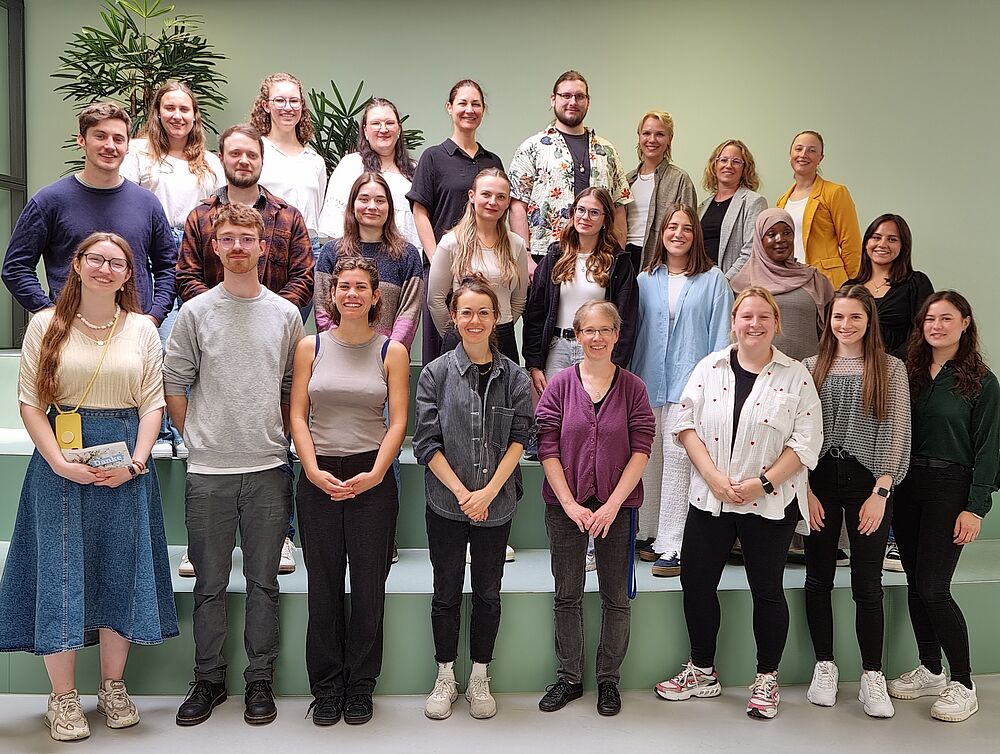
To apply for this degree programme, you must have completed at least six theoretical semesters of higher education studies (all subject areas) with an overall grade of 2.5 or better and have generally earned 210 ECTS credits, but at least 180 ECTS credits. If you bring less than 210 ECTS credits with you at the start of your studies, you will need to plan additional time to make up for any missing ECTS credits. In addition, you prove your above-average motivation to study with a letter of motivation.
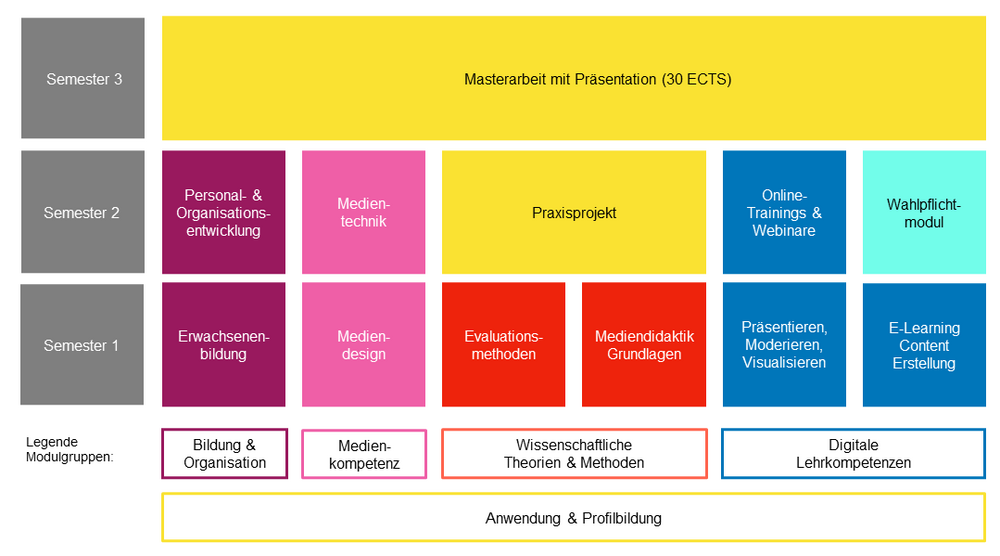
The Master's degree programme in Digital Learning comprises 90 ECTS credits and a standard period of study of three semesters in the full-time version and six semesters in the part-time version. To the part-time study plan
In the modules of the 1st and 2nd semesters, you will be able to describe and evaluate adult learning processes and categorise them in a business context. You will sharpen your awareness of the aesthetic design of media and gain knowledge of technical standards and media formats. You will receive a sound introduction to the conception and implementation of digital learning scenarios and develop the skills to produce multimedia and interactive learning modules with the help of authoring tools. You will acquire the role understanding and tools to present knowledge confidently and moderate participant-orientated live online events.
A special feature of the degree programme is the practical project. In this module, you apply the theoretical and practical knowledge you have acquired to a real, complex task. You will gain valuable practical experience and establish contacts with companies. You will also train your ability to work together virtually and across disciplines.
The Master's thesis is the masterpiece of your degree programme. It offers you scope for individual specialisation and profile development and can be completed in cooperation with a company.
Career prospects
After completing the master's degree program, you will be able to work in the field of in-company training and continuing education, in personnel development, in e-learning agencies, in adult education, in media and publishing houses, and in interface or multiplier functions in companies and organizations in an operational, advisory, or managerial capacity.
Possible job profiles include: Digital Learning Expert, Corporate Learning Manager, Learning Consultant, E-Learning Author, Blended Learning Designer, Adult Education Officer, Education Project Manager, Trainer - Presence/Online.
FAQ
Can I also apply if I do not yet fulfil all the admission requirements?
Yes, you can apply even if you do not yet have all the documents together, e.g. if you are missing the grade of your Bachelor's thesis and therefore the actual overall grade. If you submit your current grade point average (without BA grade) instead, it can usually be estimated whether you will (probably) achieve the required grade point average. In this way, you may be able to obtain admission in a timely manner and thus more planning security.
I have a Bachelor's degree with 180 ECTS - how can I make up the missing points?
If you have fewer than 210 ECTS credits when you start your degree programme, you must make up the missing 30 credits within the first two semesters. This can be achieved by completing additional study modules (including VHB courses) or by providing evidence of relevant professional experience (e.g. student traineeship, internship). A combination of several options is also possible. Each case must be considered individually. Seek advice and find out which certificates you need to prepare and submit.
Can I also study Digital Learning part-time?
Yes, from winter semester 24/25, the degree programme can also be studied part-time. The standard period of study will be extended from 3 to 6 semesters, so that you will take about half of the modules from the regular curriculum per semester. Please note that all courses are offered on an annual basis, not every semester. You have 12 (instead of 6) months to complete the Master's thesis in the part-time version.
Is Digital Learning a part-time degree programme?
No, Digital Learning is not a part-time degree programme, as it is not tailored to the needs of working people and does not charge extra tuition fees. Digital Learning is a state-run programme and is integrated into regular teaching at Ansbach University of Applied Sciences, i.e. courses can in principle take place on all days of the week, albeit partly in online format. The self-study, project and examination phases that accompany the courses are demanding and time-consuming, so that the focus should be on studying, not on a professional activity. Experience has shown that a manageable amount of part-time work is possible.
From the winter semester 2024/2025, there will also be a part-time option, which will give you a longer standard period of study and further flexibility. Nevertheless, you should not underestimate the workload of the Master's degree programme (90 ECTS in total) and calculate your study-work-life balance realistically.
What technical equipment do I need for the degree programme?
To participate in the online events, you will need your own, fully-fledged end device (desktop PC or notebook) with a powerful internet connection, webcam plus headset. Your personal learning location should allow undisturbed participation in the online courses.
How high is the proportion of attendance events and how many attendance days are there in the semester?
Around a quarter of the compulsory courses take place in person and are usually organised in such a way that the teaching units are combined into an average of around one day per week. Block courses on several consecutive days are also possible. The exact teaching times are announced at the beginning of the semester. As our lecturers teach in different degree programmes and there are dependencies between the timetables, it is unfortunately not possible to plan at an earlier date. Please refrain from making enquiries. The current cross-degree programme timetable of Ansbach University of Applied Sciences provides you with an initial rough orientation and important key dates (for download, see homepage).
What forms of teaching are used?
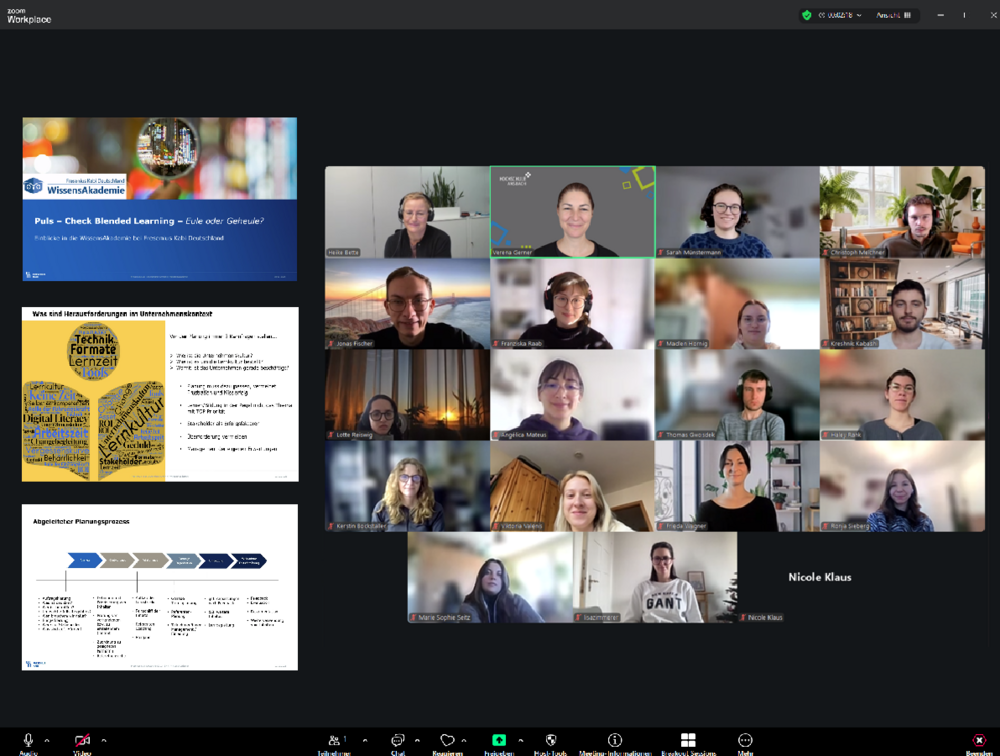
Live online courses via video conference, traditional face-to-face seminars, blended learning and, in some cases, asynchronous online courses via the learning platform are used. The lecturers attach great importance to an interactive teaching style in which the students are involved. In addition to imparting knowledge through lectures, videos and literature, the focus is on activating methods, including practical exercises, simulations, group work and learning objective checks.
Which forms of examination are used?
The Digital Learning degree programme is very application-oriented. For this reason, most of the modules involve coursework and project work as well as presentations and oral examinations. In a few modules focussing on theory teaching, there are traditional written examinations.
Staff
Prof. Dr. Verena Gerner
Studiengangleitung Digital Learning (DL) / Studienfachberatung Digital Learning (DL)
0162 2587322 66.1.56 nach Vereinbarung verena.gerner vCard
Prof. Dr. Verena Gerner
Studiengangleitung Digital Learning (DL) / Studienfachberatung Digital Learning (DL)
Funktionen
Studiengangsleitung Digital Learning (DL)
Wissenschaftliche Leiterin Servicecenter für digitale Lehre und Didaktik (SDL)
Lehrgebiete
Entwicklung digitaler Lehr-/Lernumgebungen
Gestaltung & Moderation synchroner Online-Lehrformate
Grundlagen der Hochschuldidaktik
Vita
Seit 10/2019: Professorin für Didaktik digitaler Medien an der Hochschule Ansbach; Leitungsfunktion in den Drittmittelprojekten „Digitalisierungskolleg“ (DigiKom) und „Scientific Teaching“ (SciTea)
Seit 2015: Freiberufliche Trainerin und Beraterin für Unternehmen und Akademien, u.a. WiSo-Führungskräfte-Akademie Nürnberg und Bayerisches Zentrum für Innovative Lehre (BayZiel)
2016-2019: Promotion zum Thema „Digitale Kompetenz bei Pädagogischen Professionals fördern“ am Lehrstuhl für Wirtschaftspädagogik und Personalentwicklung der FAU Erlangen-Nürnberg; Wissenschaftliche Mitarbeiterin an der Hochschule Ansbach; Lehrbeauftragte an der TH Nürnberg; Erwerb des Zertifikats Hochschullehre Bayern
2012-2016: Berufspraxis bei zwei Weiterbildungsunternehmen: Koordinatorin Management-Ausbildung bei Grundig Akademie Nürnberg, Leiterin Geschäftsfeldentwicklung bei Professio GmbH Ansbach; zertifizierte Weiterbildungen als Trainerin, Business-Coach und systemische Organisationsentwicklerin sowie Qualifizierung als Live-Online-Trainerin, Blended Learning Designerin und virtuelle Moderatorin
2008-2013: Studium der Sozialökonomik (M.Sc.) an der FAU Erlangen-Nürnberg und Zweitstudium der Psychologie (B.Sc.) an der FernUni Hagen
2006-2008: Ausbildung zur Mediengestalterin für Digital- und Printmedien (IHK)
Veröffentlichungen
Diener, F., Gerner, V., & Kätzel, C. (2024). Die Corona-Pandemie als Game Changer der (Online-) Lehre. Ein Erfahrungsbericht aus der Hochschule Ansbach. In A. Schneider & C. Scholz (Hrsg.), Digitale Transformation in der Bildung: Digital Change Summit 2022 (S. 75–92). Springer VS. https://doi.org/10.1007/978-3-658-44525-6_4
Diener, F., Gerner, V., & Kätzel, C. (2022). Gruppenarbeiten mit hohen Teilnehmerzahlen effektiv gestalten: Herausforderungen und Lösungsansätze für die synchrone und asynchrone Online-Lehre. In M. A. Pfannstiel & P. F.-J. Steinhoff (Hrsg.), E-Learning im digitalen Zeitalter (S. 703–720). Springer Gabler. https://doi.org/10.1007/978-3-658-36113-6_34
Gerner, V., & Kipp, M. (2021). Digitale Lehre. In F. Waldherr & C. Walter (Hrsg.), didaktisch & praktisch: Methoden und Medien für die Präsenz- und Onlinelehre (S. 153–164). Schäffer-Poeschel.
Gerner, V. (2020, 21. Dezember). Webcam-Nutzung von Studierenden in Online-Veranstaltungen: Warum eine schwarze Wand nicht stumm sein muss und wie man Studierende aus der Reserve lockt. Hochschulforum Digitalisierung. https://hochschulforumdigitalisierung.de/de/blog/webcam-nutzung-studierende
Gerner, V., Jahn, D., & Schmidt, C. (2019). Blended Learning: Die richtige Mischung macht’s! Ein praktischer Ideengeber für digital unterstützte Lehr-/Lernkonzepte. Friedrich-Alexander-Universität Erlangen-Nürnberg/Hochschule Ansbach. https://www.ili.fau.de/wp-content/uploads/2019/12/Leitfaden-Blended-Learning-2019.pdf
Gerner, V. (2019). Digitale Kompetenz bei Pädagogischen Professionals fördern [Dissertation, Friedrich-Alexander-Universität Erlangen-Nürnberg]. OpenFAU. https://open.fau.de/handle/openfau/11297
Gerner, V., & Vode, D. (2018). Schreiben digital in die Lehre integrieren. In B. Berendt, A. Fleischmann, N. Schaper, B. Szcyrba, & J. Wildt (Hrsg.), Neues Handbuch Hochschullehre (Beitrag G4.14, S. 1–14). DUZ Verlags- und Medienhaus.
Rölz, H., Vött, M., & Gerner, V. (2017). Das wäre doch gelacht?! Humor als Erfolgsfaktor beim interkulturellen Lernen. OrganisationsEntwicklung,(3), 55–59.
Gerner, V., & Waible, F. (2017). Online-Workshops: Interaktive Webkonferenzen gestalten und moderieren. PersonalEntwickeln. Das aktuelle Nachschlagewerk für Praktiker, 8(102), 1–21.
Engelhardt, E. M., & Gerner, V. (2017). Einführung in die Online-Beratung per Video. e-beratungsjournal.net: Fachzeitschrift für Onlineberatung und computervermittelte Kommunikation, 13(1), 18–29.
Rölz, H., Gerner, V., & Tissot, O. (2016). Humor in Training und Organisationsentwicklung. PersonalEntwickeln. Das aktuelle Nachschlagewerk für Praktiker, 8.95, 1–28.
Gerner, V., Rölz, H., & Carl, M. (2015). Wenn alles ganz schnell gehen muss: Expressberatung beim Deutschen Hörbuchpreis. OrganisationsEntwicklung,(1), 61–65.
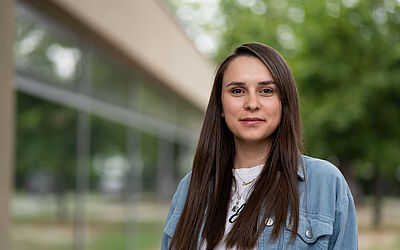
Cathrin Schmidt
Fakultätsassistentin Medien
0981 4877-253 92.2.5 Montag bis Donnerstag nach Vereinbarung cathrin.schmidt vCard
Cathrin Schmidt
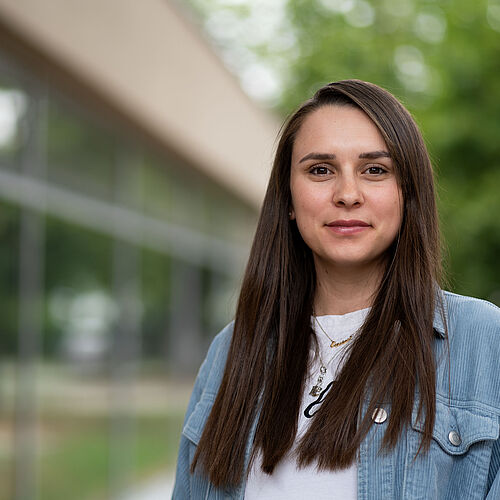
Fakultätsassistentin Medien
Funktionen:
- Fakultätsassistentin Medien
Betreute Studiengänge:
- Visualisierung und Interaktion in digitalen Medien (VIS)
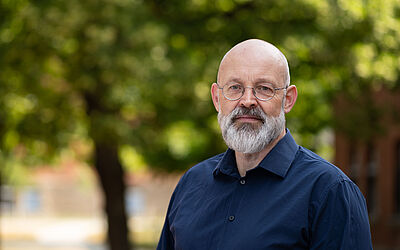
Prof. Michael Leuthner
Professor Digital Learning (DL)
0171 3849664 66.1.56 Dienstags 10:00–11:30 Uhr michael.leuthner vCard
Prof. Michael Leuthner
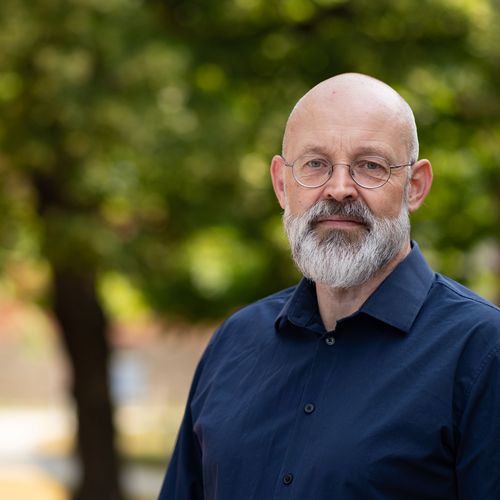
Professor Digital Learning (DL)
Funktionen:
- Professor Multimedia und Kommunikation (MUK)
- Professor Digital Learning (DL)
- Professor Ressortjournalismus (RJO)
- Professor Visualisierung und Interaktion in digitalen Medien (VIS)
- Mitglied Fakultätsrat Medien
- Mitglied Senat und Hochschulrat
Lehrgebiete:
- Bewegtbild/Kamera
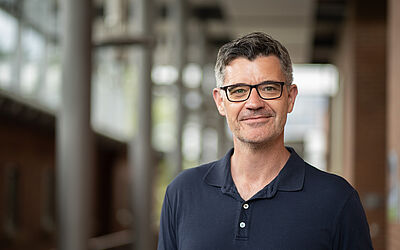
Prof. Dr. Roman Rusch
Professor Digital Learning (DL) / Vorsitz Prüfungskommission Digital Learning (DL)
92.2.5. nach Vereinbarung roman.rusch vCard
Prof. Dr. Roman Rusch
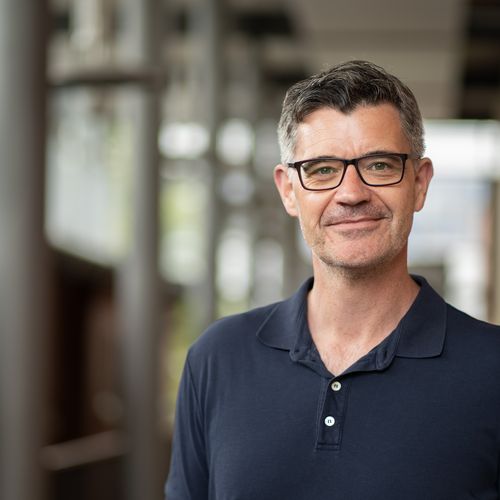
Professor Digital Learning (DL) / Vorsitz Prüfungskommission Digital Learning (DL)
Funktionen:
- Professor Digital Learning (DL)
- Vorsitz Prüfungskommission Digital Learning (DL)
- Professor Medienwirkungen und Medienpsychologie (MUM)
- Professor Public Relations und Unternehmenskommunikation (PUK)
- Professor Ressortjournalismus (RJO)
- Vorsitzender Prüfungskommission Ressortjournalismus (RJO)
Prof. Philipp Walliczek, M.A.
Professor Digital Learning (DL)
0981 4877-237 66.1.56 nach Vereinbarung philipp.walliczek vCard
Prof. Philipp Walliczek, M.A.
Professor Digital Learning (DL)
Funktionen:
- Professor Multimedia und Kommunikation (MUK)
- Professor Digital Learning (DL)
- Studienfachberatung Multimedia und Kommunikation (MUK)
- Leiter Fotostudio
- Mitglied Fakultätsrat Medien
Lehrgebiete:
- Fotodesign
- Journalismus
- Mediendesign
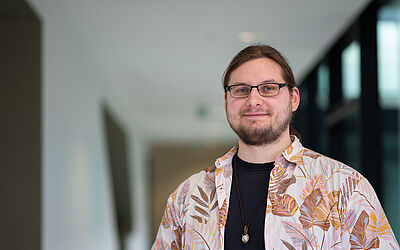
Hendric Rahm
Projekt KIHM Wissenschaftlicher Mitarbeiter im Bereich KI und Bildung
0981 4877-519 RET033 Rettistraße 56, 91522 Ansbach nach Vereinbarung hendric.rahm vCard
Hendric Rahm
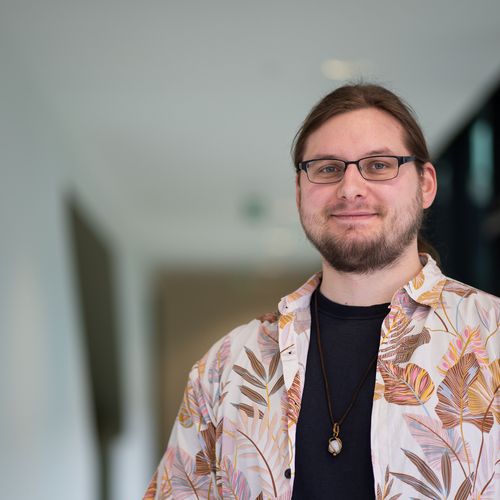
Projekt KIHM Wissenschaftlicher Mitarbeiter im Bereich KI und Bildung
Funktion
- Projekt KIHM
Wissenschaftlicher Mitarbeiter im Bereich KI und Bildung
© 2026 Hochschule Ansbach