The part-time bachelor’s program in Applied Polymer Technology is designed for working professionals seeking to advance their technical qualifications, as well as for high school graduates who wish to combine their studies with starting their careers.
Thanks to the block-style format and the option to take courses on a modular basis, the program can be flexibly balanced with family and work commitments. Upon successful completion, you will be awarded the academic degree of Bachelor of Engineering—and you will be an engineer.
Industrial foremen, technicians, technical business administrators, and those in comparable professions benefit particularly from the recognition of prior learning and can shorten the duration of their studies. Direct admission is also possible for applicants with a high school diploma or vocational high school diploma, along with completed vocational training and relevant professional experience.
The part-time Applied Polymer Technology program is practice-oriented and broadly focused. It prepares you for a wide range of roles in the plastics industry—both as a manager and as a technical expert.
Fundamentals of engineering and business administration are supplemented by modules on personal development as well as specialized modules that impart modern and practice-oriented expertise in the plastics sector. This results in a holistic skill set that combines technical expertise with management and methodological skills.
For example, the Additive Manufacturing and Design module utilizes AI-supported algorithms. In this module, students take a collaborative approach in which AI acts as a co-designer to develop optimized solutions for manufacturing-ready component design using generative design.
The Digital Production module covers the technological pillars of the connected factory: it takes an integrated approach to manufacturing execution systems for control, Industry 4.0 as a connectivity strategy, and the digital twin for process mapping.
In the Circular Economy and Plastics Recycling module, global material flows are analyzed. The focus is on how modern sorting technologies work, as well as the specific applications of mechanical and chemical recycling, in order to achieve closed-loop value chains.
These excerpts illustrate the strong practical focus of the entire program, in which all topics are explored in depth through project-based and hands-on work.
| Short form | AKT |
| Type of study | Part-time, tuition fees apply |
| Standard period of study | 11 semester Competencies and skills already acquired as well as existing professional practice can be credited, so that the duration of study is ideally on 6 semesters. |
| Award | Bachelor of Engineering (B.Eng.) |
| Start of studies | Winter semester & |
| Admission Restrictions | None |
| Lecture location | Weissenburg |
| Language of instruction | German |
| Course management | Prof. Dr.-Ing. Thomas Müller-Lenhardt |
| Student advisory service | Prof. Dr.-Ing. Thomas Müller-Lenhardt |
| Information events | Please register via our webform. For online events, you will receive corresponding access data from us. Sep 16, 2026, 04:00 - 05:00 p.m. (Zoom) |
Content
The Bachelor's programme consists of eleven semesters. However, the first three semesters, which cover the basics of business, scientific and human resources management, may be credited due to competences and skills already acquired outside of the university. Due to the existing professional practice, the two practical study semesters are usually also credited. Ideally, the duration of study should be six semesters (three years).
A description of the individual modules can be found in the module manual.

Module study
You can also attend courses outside of a classical course of study and continue your education in this way. As part of a module course, you can take individual, selected subjects from the regular range of courses. After successful completion of a module, you will receive a certificate. Completed modules can also be credited towards a subsequent course of study. The modular study programme can provide prospective students with a gradual, flexible introduction to a study programme or allow them to acquire professionally relevant academic skills. It is possible to switch from module studies to bachelor studies after each semester.
Target group
The part-time study Applied Polymer Technology is aimed at professionals who want to advance their career by improving their professional qualifications and developing their personal skills. The good thing about this is that you can continue to work in your profession and continue to earn money. The part-time format ensures that you can study alongside your career and family.
People who have completed their high school diploma, for example, and do not yet have a job but would like to work alongside their studies are also equally suitable for part-time study.
In comparison to the dual study program, you can study alongside your full-time job, while the dual study program alternates between theoretical phases at the university and practical phases at the company.
As the part-time study Applied Polymer Technology is neither linked to nor based on vocational training, it is suitable for people with different educational backgrounds, different professional experience and different ages.
Previous training is rewarded: industrial foremen, technicians, technical business administrators or similar professional groups benefit in particular from credits and can thus shorten their part-time studies to three years. We would be happy to provide you with information on the subject of crediting and recognition of skills in your specific case.
Inform here
Teaching methodology and presence phases
The courses are designed to accommodate the specific needs of working people. They are organised in such a way as to be compatible with full-time employment. Periods of attendance are limited to an acceptable minimum. Lectures take place in four blocks per semester (usually Wednesday to Saturday). In addition, professional practice is integrated into the course, which results in a high level of practical relevance. The knowledge gained is put into practice in students’ own companies, for example in the form of project work.
Campus
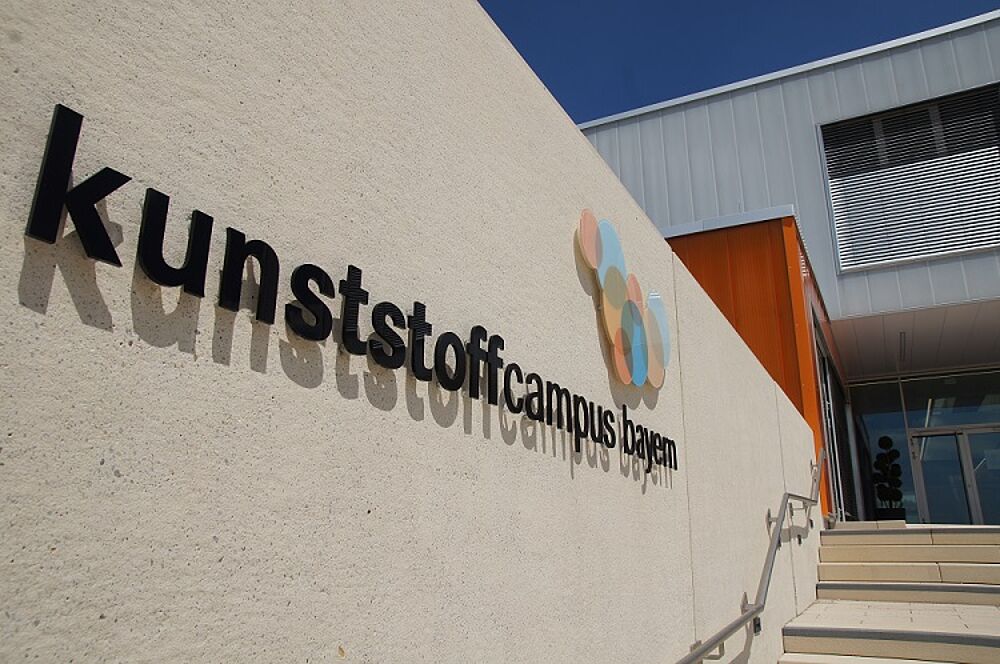
Lectures take place at the kunststoffcampus bayern in Weißenburg. The Technology and Study Centre Weißenburg is a joint research and educational institution run by Ansbach University of Applied Sciences and Deggendorf University of Technology. It also includes leading companies from the region as well as other collaborative partners from the scientific community and trade associations.
Application deadlines
Study
Winter semester: Application is possible from May to September. Study begins on October 1.
A maximum of 15 study places is available.
Module study
Summer semester: Application is possible at any time. Study begins on March 15.
Winter semester: Application is possible at any time. Study begins on October 1.
Admission to the program is possible as long as places are available.
For application please contact Susanne Rönnebeck.
Costs and funding
Study
Fees are charged for part-time studies at Bavarian universities. These are calculated to cover the additional costs arising from the special form of organization. The cost per semester is €2,400 in tuition fees (see Schedule of fees and charges) plus €82 student union fee.
Module study
The fee for the modular studies is calculated according to the tuition fee for the course and the number of modules chosen (see Schedule of fees and charges) plus €82 student union fee per semester.
Payment method
The tuition fees are due in one sum before enrollment or registration for further studies (re-registration). Monthly payment is also possible upon request. The fee for paying in installments is €50 and is due with the last installment (see Schedule of fees and charges).
Funding
Further education can be subsidized. Various programs of the Free State of Bavaria and the Federal Government provide support further qualification.
Advancement scholarship:
Further information on the topic of funding:
Accreditation
Applied Polymer Technology has been assessed by the evaluation agency evalag.
You can see the accreditation and evaluation by the accreditation council in the accreditation database (click here).
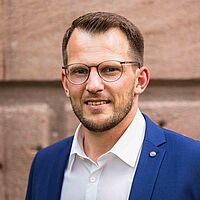
Maria Englbrecht
![[Translate to Englisch:] Maria Englbrecht](/fileadmin/_processed_/a/2/csm_Testimonial_AKT_Maria_Englbrecht_849a5b1d74.jpg "[Translate to Englisch:] Maria Englbrecht")
Maria Englbrecht
Specialist Process Development
Kautex Textron, Mallersdorf
"Today, I work enthusiastically for Kautex Textron in the area of process development for new, innovative products. I often look back fondly on my time at the plastics campus in Weißenburg and can use the skills I acquired there profitably in my day-to-day work."
Dr.-Ing. Simon Amesöder
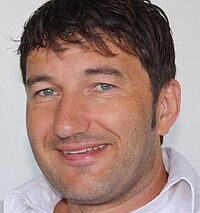
Dr.-Ing. Simon Amesöder
Managing Director of RF Plast GmbH
"At RF Plast, we see developing and retaining good employees as a competitive advantage. In the area of plastics technology, we have therefore already supported several employees in their further education for a Bachelor of Engineering in Applied Polymer Technology and actively implemented continuous personnel development for our employees."
Staff
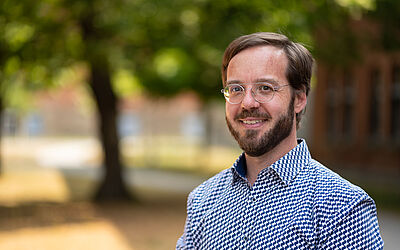
Prof. Dr.-Ing. Thomas Müller-Lenhardt
Studiengangsleiter Angewandte Kunststofftechnik (AKT)
09141 874669-305 51.2.20 nach Vereinbarung t.mueller-lenhardt vCard
Prof. Dr.-Ing. Thomas Müller-Lenhardt
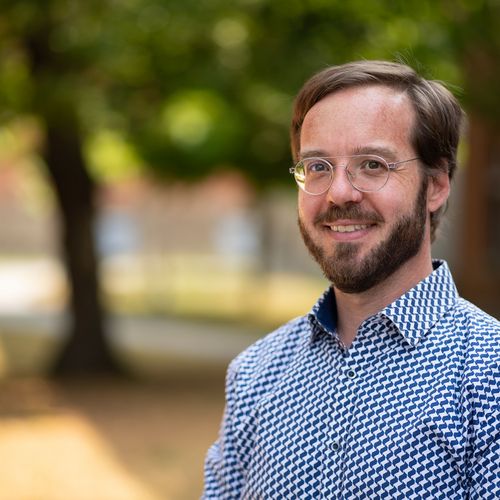
Studiengangsleiter Angewandte Kunststofftechnik (AKT)
Funktionen:
- Professor für Kunststofftechnik
- Studiengangsleiter Angewandte Kunststofftechnik (AKT)
- Vorsitzender Prüfungskommission Angewandte Kunststofftechnik
- Professor Nachhaltige Ingenieurwissenschaften (NIW)
- Stellvertretender wissenschaftlicher Leiter Studienzentrum „kunststoffcampus bayern“ Weißenburg (WUG)
Lehrgebiete:
- Analyseverfahren
- Werkstoffkunde
- Kunststofftechnik
- Kunststoffverarbeitung
- Spezielle Verarbeitungstechnik
- Prüftechnik
- Verbindungstechnik
- Entwicklungsstrategien
- Faserverbundkunststoffe
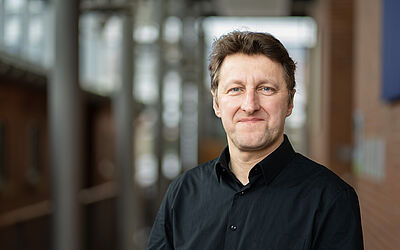
Prof. Dr.-Ing. Alexandru Sover
Studiengangsleiter Master Wirtschaftsingenieurwesen (WIN)
0981 4877-527 51.1.21 nach Vereinbarung a.sover vCard
Prof. Dr.-Ing. Alexandru Sover
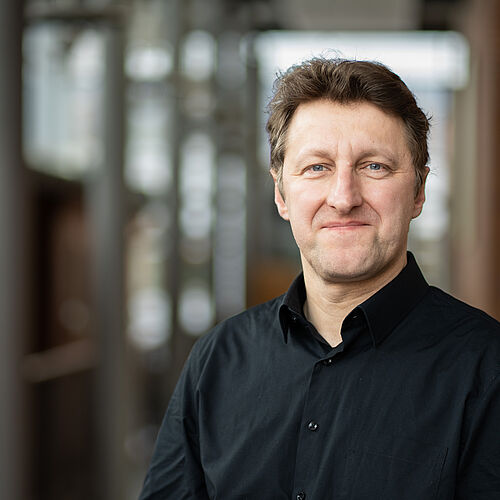
Studiengangsleiter Master Wirtschaftsingenieurwesen (WIN)
Funktionen:
- Studiengangsleiter Master Smart Industry Management (SIM)
- Forschungsprofessor Intelligente Werkstoffe und ihre Anwendungen
- Projektleitung: „NextGen-Kunststoffe“
- Professor der Studiengänge WIG, WIN/SIM, NIW, AKT
- Mitglied Fakultätsrat Technik
- Laserschutzbeauftragter der Hochschule Ansbach
Lehrgebiete:
- Werkstofftechnik
- Konstruktion
- Smart MaterialsKunststofftechnik
- Prüftechnik & Analyseverfahren
- Fügetechnik
- Additive Fertigung & Design
- Bionik in Additive Manufacturing
- Kunststoffverarbeitung
- Kunststoffprüfung, -analyse
- Laserbearbeitung
Forschungsfelder:
- Intelligente Werkstoffe
- Entlackung von Kunststoffbauteilen
- Entschichten von Hybridmaterialien
- Additive Manufacturing (FDM/FFF; SLS, SLA)
- Produktentwicklung
Labore
- Additive Fertigung
- Laserbearbeitung
- Smart Materials und Kunststoffverarbeitung
- Thermische Analyse
- Werkstofftechnik
Publikationen (Auszug)
- Sover A, Laserentlackung von thermoplastischen Kunststoffen, Fachvortrag am IMCcon 2025 Effizienz trifft auf Brillanz 11./12. März 2025 | Neue Materialien Bayreuth
- Sover A, Zink M, Innovative, environmentally friendly decoating of metallised plastic products using laser technology (2024) Presentation at the 28th Edition of International Conference (IMANEE 2024), Athens Oct. 2024
- Sover A, Zink M, Innovative, environmentally friendly decoating of metallised plastic products using laser technology (2024) The 28th Edition of International Conference (IMANEE 2024) Oct. 2024
- Bănică C-F, Sover A, Anghel D-C. Printing the Future Layer by Layer: A Comprehensive Exploration of Additive Manufacturing in the Era of Industry 4.0. Applied Sciences. 2024; 14(21):9919. https://doi.org/10.3390/app14219919
- Vasile Ermolai, Alexandru Sover, Marius Andrei Boca, Andrei Marius Mihalache, Alexandru Ionuț Irimia, Adelina Hrițuc, Laurențiu Slătineanu, Gheorghe Nagîț, Răzvan Cosmin Stavarache, Mechanical behavior of macroscopic interfaces for 3D printed multi-material samples made of dissimilar materials, Mechanics & Industry 25 24 (2024), https://doi.org/10.1051/meca/2024017
- Sover, A., M-A Boca, Characterisation of the Cooling System Performance of Additively Manufactured Thermoforming Moulds, Conference ICORSEE 2024 (Lecture)
- Boca, MA., Sover, A. (2024). Characterisation of the Cooling System Performance of Additively Manufactured Thermoforming Moulds. In: Cioboată, D.D. (eds) International Conference on Reliable Systems Engineering (ICoRSE) - 2024. ICoRSE 2024. Lecture Notes in Networks and Systems, vol 1129. Springer, Cham. https://doi.org/10.1007/978-3-031-70670-7_2
- Sover, A., Michalak, M., „Klein, aber fein; Wie hochpräzise additive Fertigung gelingt“, https://www.plastverarbeiter.de/verarbeitungsverfahren/wie-hochpraezise-additive-fertigung-gelingt-969.html, Plastverarbeiter 04.2024
- Tekiner I. H., Knoblauch A., Sover A, Häfner P., Muschler A, Tainsa M, Response of Secondary Structural Components of Egg White Proteins to Cold and Thermal Extremities in Water/Deuterium Oxide Mixtures, Carpathian Journal of Food Science and Technology, 2024, 16(1), 198-209, https://doi.org/10.34302/crpjfst/2024.16.1.16
- Annette Martin, Alexandru Sover, FORSCHUNG IN FRANKEN, Zweite Chance für kontaminiertes Plastik?,
- https://www.fraenkischertag.de/region/ansbach/hochschule-ansbach-zweite-chance-fuer-kontaminiertes-laborplastik-art-313319, 01.2024
Weitere Publikationen
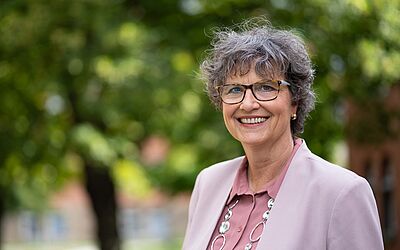
Susanne Rönnebeck
Studiengangsassistentin Angewandte Kunststofftechnik (AKT)
09141 874669-303 WUG 2.09 (Richard-Stücklen-Straße 3, 91781 Weißenburg i. Bay.) nach Vereinbarung susanne.roennebeck vCard
Susanne Rönnebeck
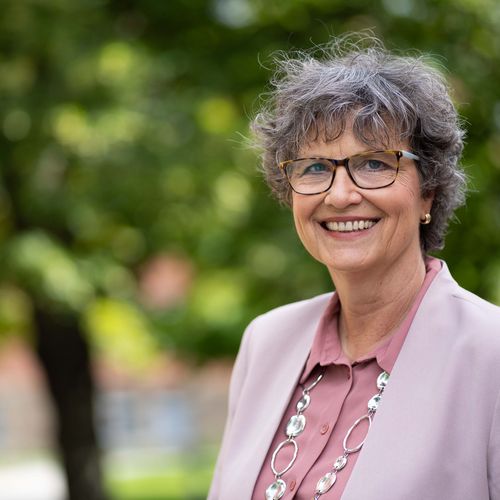
09141 874669-303
WUG 2.09 (Richard-Stücklen-Straße 3, 91781 Weißenburg i. Bay.)
nach Vereinbarung
susanne.roennebeck
vCard
Studiengangsassistentin Angewandte Kunststofftechnik (AKT)
Funktionen:
- Studiengangsassistentin Angewandte Kunststofftechnik (AKT)
- Studiengangassistentin Leadership (LEA)
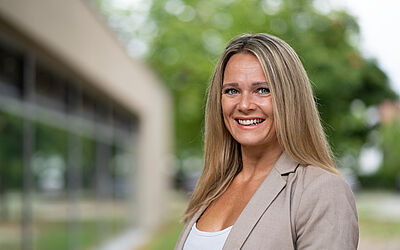
Agnes Rutkowski
Fakultätsassistentin Fakultät Technik
0981 4877-584 92.2.42 nach Vereinbarung agnes.rutkowski(at)hs-ansbach.de vCard
Agnes Rutkowski
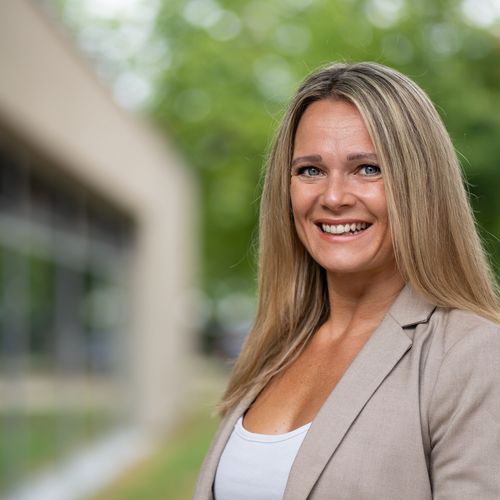
Fakultätsassistentin Fakultät Technik
Funktionen:
- Fakultätsassistentin Fakultät Technik
Betreute Studiengänge:
- Angewandte Kunststofftechnik (AKT)
- Applied Research in Engineering Sciences (APR)
- Energiemanagement und Energietechnik (EMT)
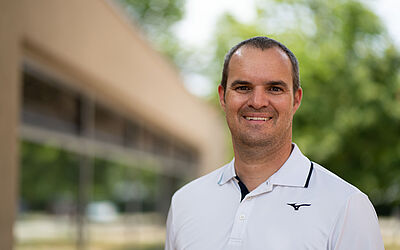
Dipl.-Ing (FH) Philipp Häfner, M.Sc.
Mitarbeiter Fakultät Technik
0981 4877-287 92.1.36 nach Vereinbarung philipp.haefner vCard
Dipl.-Ing (FH) Philipp Häfner, M.Sc.
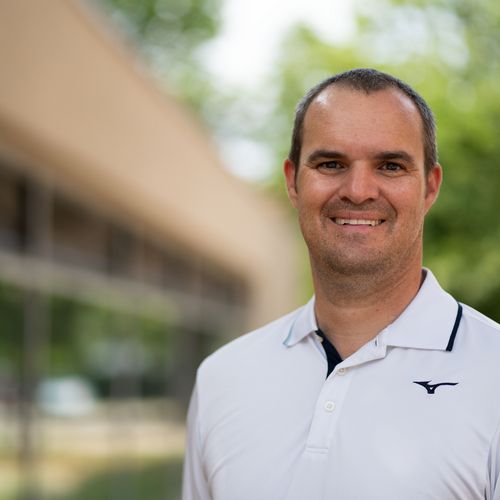
Mitarbeiter Fakultät Technik
Funktionen:
- Forschungsreferent Fakultät Technik
- Laboringenieur Fakultät Technik
- Laborbetreuer Rasterelektronenmikroskopie
Tätigkeitsfelder
- Kunststoff- Oberflächentechnik
- Plasmatechnik
- Oberflächenanalyse
Publikationen:
Verzeichnis wissenschaftlicher Arbeiten und Veröffentlichungen
© 2026 Hochschule Ansbach